

Not all road trips are created equal. Some are really long, and now some are electric. So it was on our 5,212-mile road trip in an EV from my home in the mountains of western North Carolina to the northern end of the Appalachian Range in Newfoundland. I chose to take this road trip for my sabbatical because I sought an adventure to free my mind and wanted to reflect on what it means to be citizens and climate advocates as the planet overheats. The trip delivered on all fronts.
Read my three-part series about my 5,000-mile sabbatical road trip in an EV from my home in the southern Appalachians to the island of Newfoundland, and my reflections on what it means to be citizens and climate advocates as the planet overheats.
Where Do We Go From Here, Part 1
To get to Newfoundland and back, my wife and I relied on 46 charging stops. We plugged into a mix of fast chargers along highways, slower Level 2 chargers at Canada’s national parks, and in many of the towns we visited. We plugged into standard 110-volt outlets at the inns and campgrounds where we slept, trickle charging overnight.

The road trip confirmed two things for me. Firstly, EVs have a superpower: electricity is ubiquitous. It was always there. From the first mile we drove away from our house to the most remote corner of Newfoundland, electrical lines followed us along the roads the entire way. We talk plenty about the challenges of getting enough EV chargers deployed to meet growing demand. Still, we don’t acknowledge enough that the far greater challenge of building nationwide electricity transmission and distribution systems has already been done. If we could do the latter, certainly we can do the former.
The second confirmation is that driving an EV is cheaper than a gas car. I know this to be true in my day-to-day, where I charge my EV at home at night on special, affordable electricity rates offered by my utility and save an average of $1,500 per year by not buying gas. I wasn’t sure if my EV’s affordability would hold on the road for six weeks. But it did. Sometimes I paid a premium for electricity at fast chargers for speed and convenience, with electricity prices comparable to what I would pay for gas at the pump. But unlike gas, EV charging is sometimes free, such as at the Level 2 chargers and 110-volt outlets I referenced above.
In the end, we used 1,345 kWh of energy and spent $451 on charging. If we had driven an equivalent mid-sized gas SUV those miles, given the average gas prices on the East Coast of the US and in Atlantic Canada, it would have cost me around $975. Cha-ching!
While on my sabbatical road trip, I wrote a series of articles about my experience confronting climate change, asking the question, “Where do we go from here?” Spoiler alert: I still don’t know. I also routinely posted to LinkedIn, sharing what I was experiencing in the EV, like this one from the 16-hour ferry to Newfoundland, this one from a 2,000,000-seabird nesting colony, this one from the fjords of Gros Morne National Park, and the ones excerpted below; I hope you enjoy.
EV Road Trip Lesson #1: Don’t Bother Packing Light
One of the questions we got the most before embarking on our 5,000-mile EV journey was, “How are you going to fit six weeks’ worth of stuff in your mid-size SUV?” One underappreciated aspect of EVs is what can be done with all the space freed up by the lack of an engine block, transmission, and clunky exhaust systems. We were able to fit our full tent camping setup for the 18 nights we spent camping in national parks in our EV’s frunk and hidden compartment beneath the trunk.
This included a tent, 2-person inflatable mattresses, a blanket, sheets, sleeping bags, a picnic table shelter with mesh insert and poles, a stove, fuel, and camp chairs. In a mid-sized gas SUV, we would not have been able to fit all that plus our suitcases, shoes, jackets, cooler, and food. With an EV, you can do more with less, whether that’s carrying more stuff in less space, driving more miles at less cost, or, most importantly, getting more places while generating less climate pollution. Read more.


EV Road Trip Lesson #2: Embrace the Charging Unexpected
The other question we got the most was, “Are there going to be places to charge?” To which I replied, “We shall see!” That turned out to be the right attitude. Though most of the time charging was smooth, even after driving EVs for 13 years, there were a few moments that still managed to take us by surprise. A couple of my favorites:
- A “crappy” charge: When we reached St. Martins, New Brunswick, we plugged into a 12-amp, 110-volt outlet at the inn we stayed at before entering Fundy National Park and got from 20% to 70% state of charge. We had checked in advance if there was an outlet we could use. Turned out the outlet also powered the inn’s septic pump. All I can say is that I’ve plugged into crappier places.
- 100-Meter Dash: When we got to Cheticamp, Nova Scotia, I approached a fast charger to find a sign taped to it telling me where to go to pick up a Wi-Fi signal to activate the session, which was 100 yards away. I walked to the building, phone in hand, app opened and ready to go. I picked up the signal, entered the password, and activated the session. My phone’s screen read, “You have 75 seconds to initiate this session, or else it will time out.” It had been a few years since I attempted a 100-meter dash, but dash I did, making it back to the charger and plugging in with 20 seconds remaining! Read more.


EV Road Trip Lesson #3: Electric Doesn’t Mean Inconvenient
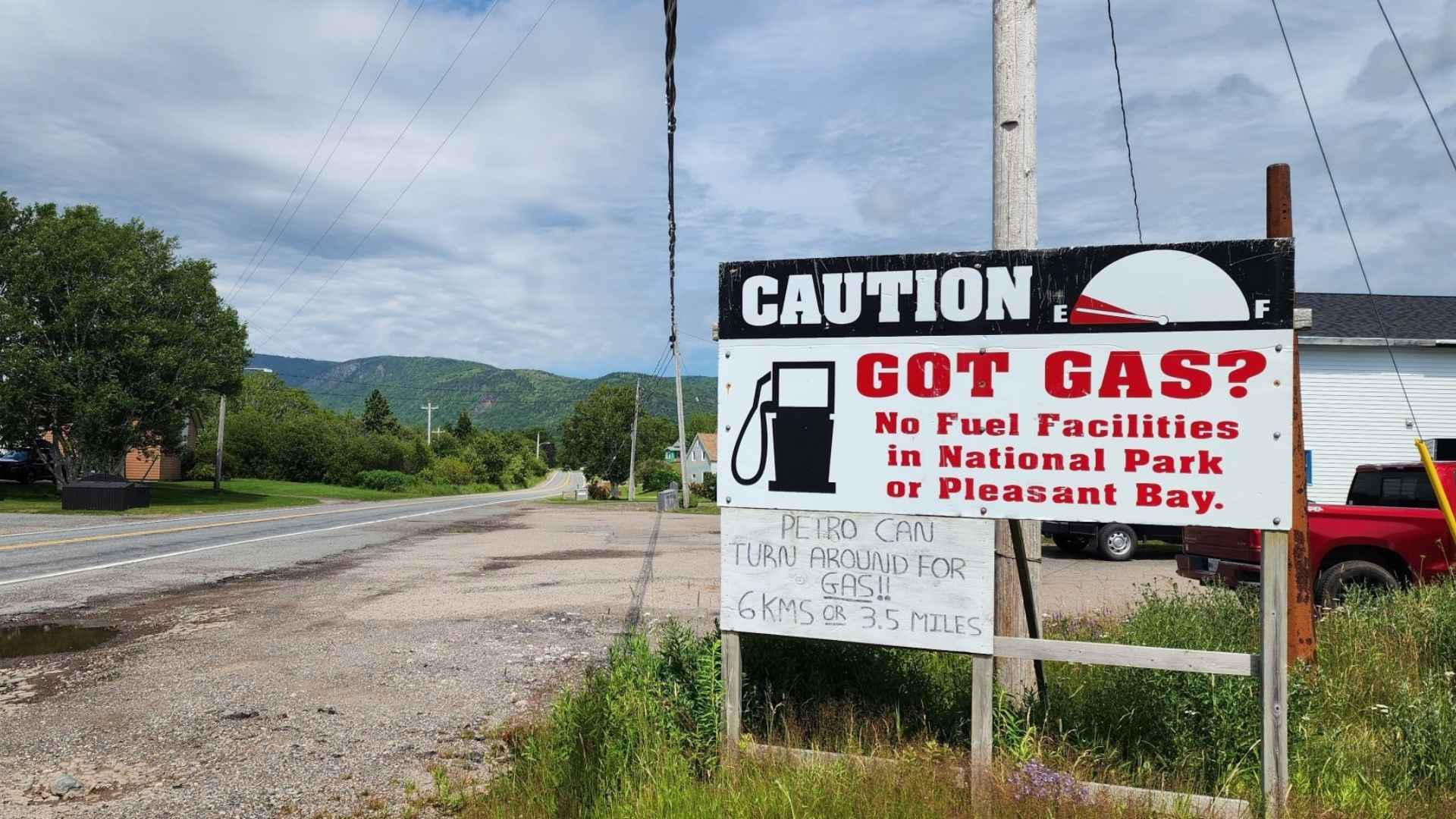
When you start the Cabot Trail that winds along Cape Breton’s coast and across the 1,500-foot highland plateau, you are greeted by a sign that lets you know there is no gas ahead. We saw a few cars turn around and head back into town to fill up. Meanwhile, the park has installed four 11kW Level 2 destination charging locations at visitor centers and trailheads, with J-plugs and NACS. It was the first time I’d been somewhere where EV chargers were more accessible than gas pumps! A few other ways EV chargers beat gas pumps in the convenience department:
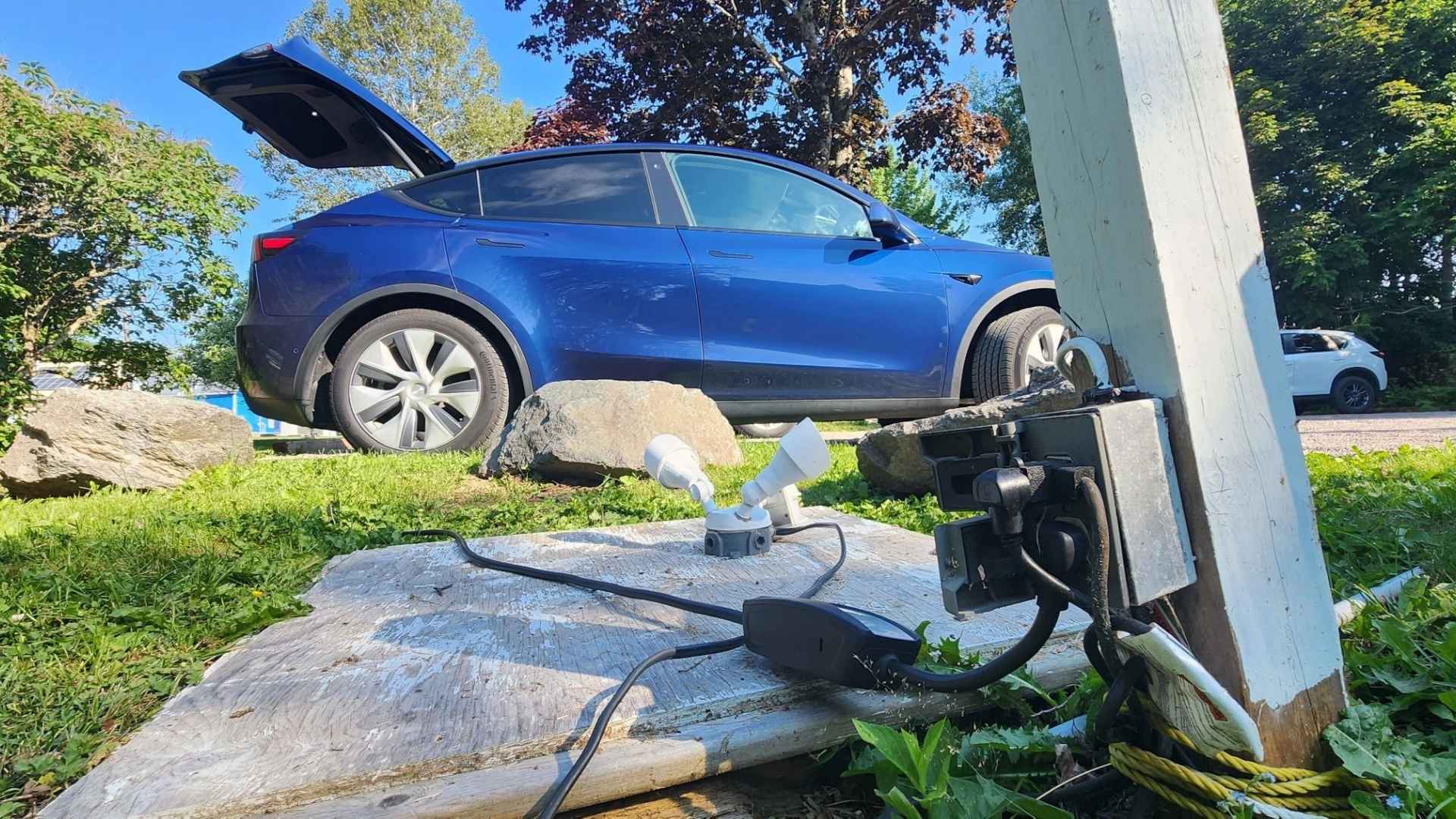
- You can charge while you sleep: One of the best things about EVs? You can charge them while you sleep! When we arrived at our inn in Advocate Harbour, Nova Scotia, we plugged into another 12-amp 110-volt outlet off our inn’s back porch. It took a little wrangling to get the plug to fit in the outlet, but it worked. We arrived with a little under 20% and trickle-charged to 100% over about 30 hours before we headed out on an overnight sea kayak adventure, camping on the beach beneath stacks of ancient cliffs and a star-filled sky.
- You can charge while you recreate: During our road trip through Canada’s maritime provinces, we relied heavily on Parks Canada’s Level 2 chargers located at select national park trailheads and visitor centers. One evening, we hiked the epic Cape Breton Highlands Jack Pine and Coastal Trails…all while our car charged to 100%. These 40amp/11kW destination chargers, when co-located with multi-hour hiking trails, are a great solution for supporting an electric outdoor-adventure lifestyle. Read more.

Want to join the EV conversation? Let’s connect on LinkedIn!


