

America can’t seem to imagine life after oil. Gas and diesel prices have spiked again as we’re drawn into another Middle East war. While consumers pay at the pump, oil companies are posting record profits. And the planet keeps breaking heat records month after month, while floods, droughts, fires, and storms intensify under a Super El Niño.
If there were ever a moment for Americans to say “enough is enough, I want an EV powered by clean energy,” this is it. Yet we keep driving oil-burning cars, trucks, and buses as if the internal combustion engine were a law of physics; you can’t live on Earth without them. It was a brilliant invention in the 1800s. The problem is that we still treat it as indispensable, long after we learned that burning oil for transportation drives climate change and undermines geopolitical stability.
Consider another 1800s invention: the scarificator. The scarificator was a spring-loaded medical device that snapped a row of sharp blades into a patient’s skin to draw blood quickly. It was mainstream medicine in its day, when doctors believed disease came from imbalanced bodily fluids and that bloodletting cured it. That was before germ theory and the subsequent discoveries of vaccines and antibiotics. Imagine if doctors had kept reaching for the scarificator anyway, bloodletting patients to this day because that’s what they were used to.
That is where we are with transportation. The internal combustion engine powered the 19th- and 20th-century economy, but at climate and geopolitical costs we can no longer afford. The better electric technology is here, and just as medicine moved from lancets to pharmaceuticals, it’s time to kick gas, move to EVs, and power them with renewable energy. The sooner, the better.
Which is why I keep advocating for the transition and posting what grabs my attention. I hope you find this month’s roundup inspiring or provoking. And if you want to join the EV conversation, let’s connect on LinkedIn!
Bipartisan Clean School Bus Legislation Introduced
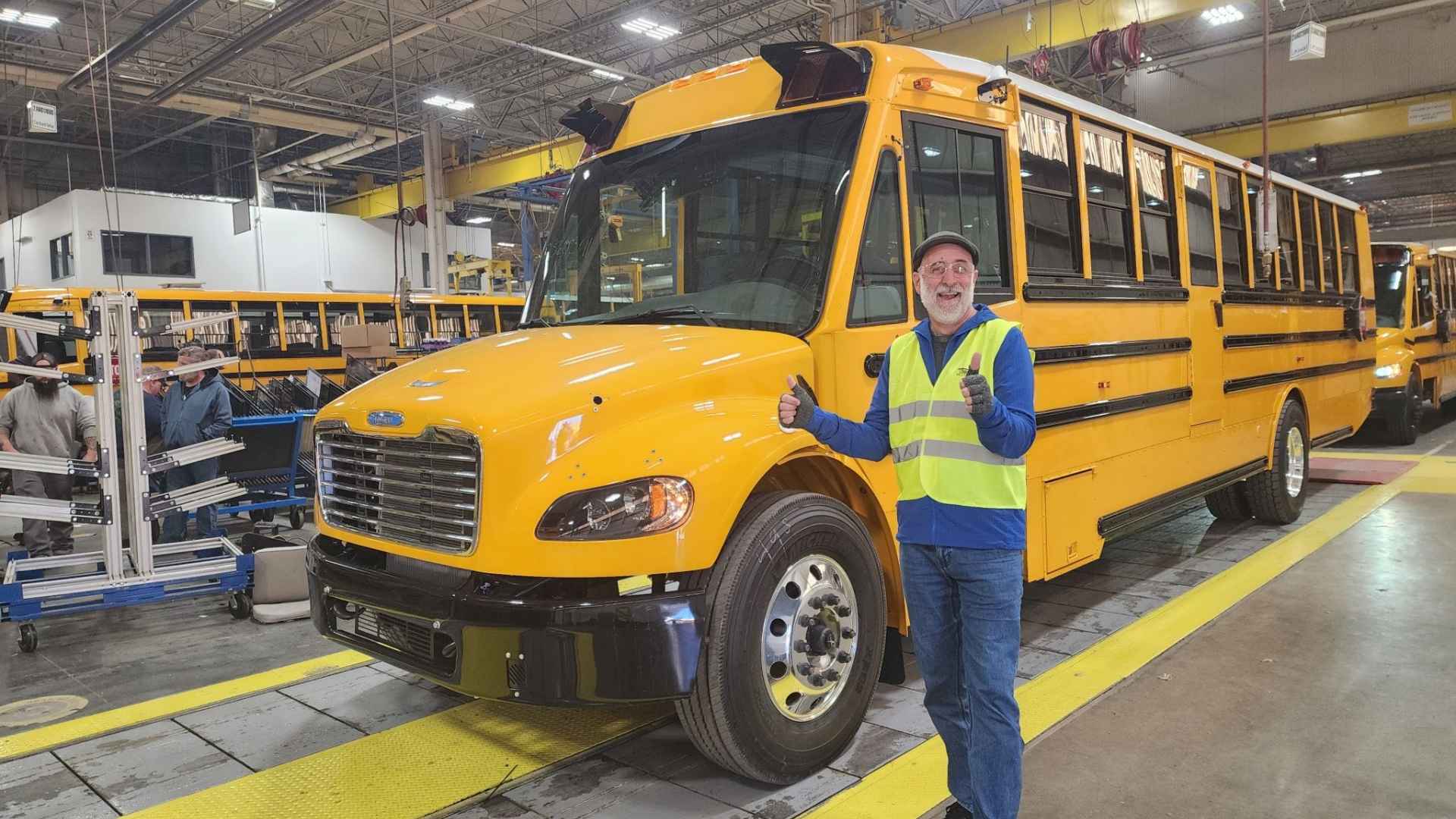
It is no secret that I love electric school buses because they protect kids from dirty air, save schools money, and reduce climate pollution. Which is why I’m glad to see some good old-fashioned bipartisanship in Congress working to expand clean school buses. This month, Democratic Congresswoman Jahana Hayes (CT-05), Democratic Congressman Greg Landsman (OH-01), and Republican Congressman Buddy Carter (GA-01) introduced the Clean School Bus Reauthorization Act, bipartisan legislation that seeks to reauthorize $1 billion to help school districts across the country replace diesel school buses with all-electric options.
This matters because riding a diesel school bus accounts for roughly a third of children’s daily exposure to certain diesel-related pollutants. In fact, a child riding inside a diesel school bus can breathe more diesel exhaust than someone in a car driving right behind it. Moreover, for an average-sized district of about 37 buses, fully electrifying at the year-to-date diesel price would save them roughly $210,000 a year in fuel. Our schools can do better things with $210,000! Not every diesel bus can be replaced today. But every bus that can be electrified should be. It is a no-regret, kid-health-benefiting, money-saving, climate-change-solving solution. Read more.
China Competes While the U.S. Cedes
China may export more EVs than any other country exports cars in total. Staggering. This reinforces the burn I feel deep in my gut: a frustration that the U.S. is playing political hot potato with next-gen transportation solutions while the Chinese government executes its well-laid plan to dominance. The U.S. should be competing. Instead we are ceding. It’s not that I don’t want to drive EVs made by Chinese companies. May the best car win. I just hate thinking about the long-term impacts of short-sighted domestic EV politicalization on American auto workers, supply chain providers, and their communities.
I can’t see a mid-century future that includes gas and diesel vehicles, no matter how hard I squint. Sticker price parity between EVs and gas and diesel vehicles is right around the corner, and once we get there, bye-bye internal combustion cars, vans, trucks, and buses. And when that happens, if American workers aren’t making the affordable, desirable EVs consumers need and want, bye-bye American auto industry as we know it. If that day comes, the blame will lie squarely at the feet of today’s policymakers and auto industry leaders. Read more.

Man Takes Unexpected EV Road Trip
Wall Street Journal readers recently challenged columnist Christopher Mims to take America’s most affordable EV on a road trip through the charging desert of the Deep South. He took the challenge, and along the way, met Jeff Cheetham, a man who had unknowingly rented an EV in Atlanta to drive to Dallas. He was praying his way there. And yet, by the time he reached Dallas, he said he would consider an EV in the future.
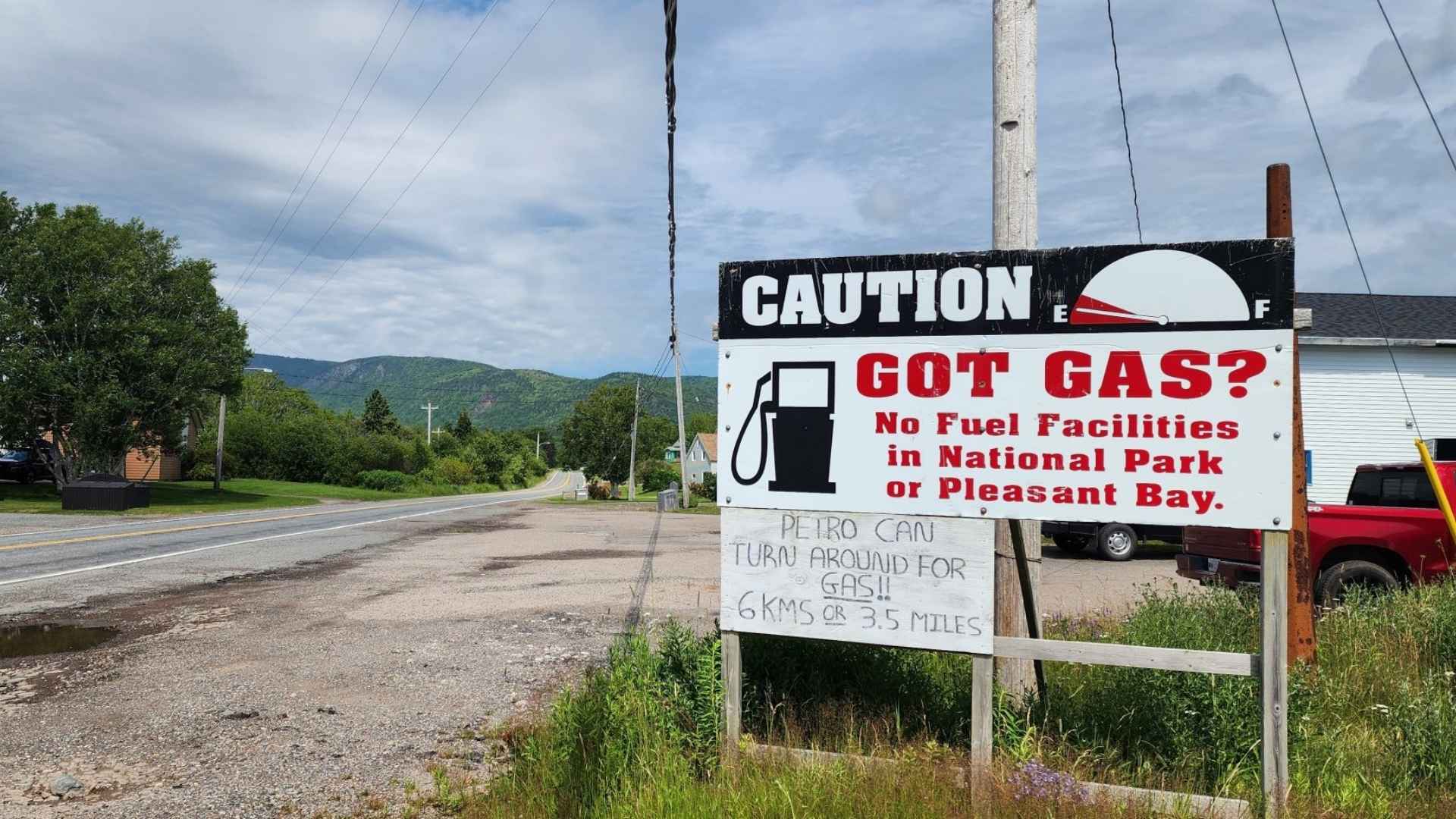
Having done a 5,000-mile EV road trip from my home at the southern edge of the Appalachian Mountains to the northern tip of the range on the island of Newfoundland, I appreciated Mims courage heading into unknown charging territory to test just how real “range anxiety” remains as public charging station deployment continues to grow at a record pace. His conclusion aligns with mine: “Owning an EV and using it as you would a gas vehicle is now mundane, though you might have to learn a few new things.” Read more.
Want to join the EV conversation? Let’s connect on LinkedIn!