

Voters in the 2026 midterm elections produced a once-in-a-generation change in the makeup of elected officials, propelling Democrats to control both chambers of Congress and flipping at least five governorships, at least nine state Houses, and one state Senate from Republican to Democrat.
Some of the most notable results of this wave election in the Southeast (Tennessee, North Carolina, South Carolina, Georgia, and Florida) include:
- Georgia Public Service Commission changed from Republican majority to Democrat majority
- Georgia governor changed from Republican to Democrat
- Georgia House of Representatives changed from Republican majority to Democrat majority
- North Carolina House of Representatives changed from Republican majority (near supermajority) to Democrat majority
- Republicans lost supermajority status in two state senates (North Carolina and Florida) and two state houses (Florida and South Carolina)
- U.S. Senators in our region shifted from 2 Democrat/8 Republican to 4 Democrat/6 Republican (plus another Democratic flip in Mississippi, a key state for TVA and Southern Company)
- U.S. House of Representatives members shifted from 19 Democrat/53 Republican to 26 Democrat/46 Republican
The fact that voters voiced the need for change is clear, but what does it mean for climate and energy issues?
Perhaps the clearest forecast can be made in Georgia, where the change in control of the Public Service Commission will shift the balance of power away from Commissioners who have a history of rubberstamping whatever Georgia Power wants to do, regardless of the cost to consumers, to a bloc of Commissioners who have forcefully positioned themselves as focused on consumers, more affordable bills, and cleaner energy sources. Incumbent Commissioner Peter Hubbard, who was reelected last week, will be opening an affordability docket with hearings on how to save customers money. He also said in a statement after his reelection, “I look forward to helping fulfill Southern Company’s goal of net zero emissions by 2050,” signaling a focus on transitioning to low-cost clean energy.
The changes in partisan control of the Georgia governorship and House of Representatives, as well as the North Carolina House of Representatives, no doubt mean changes are coming to climate and energy policy in the states, and perhaps to the relationship between the governor and legislature and the state utility regulators, but the extent of that change remains to be seen.
Election Messages on Energy Affordability and Data Centers
On two crucial energy issues, voters’ voices were clear across the nation: we need more affordable energy and more guardrails on AI data centers.
The voters’ focus on energy affordability was made clear in the results of the Georgia PSC election, perhaps the best proxy we have in the Southeast for energy bills being on people’s ballots. But more generally, pre-election polling consistently found that voters’ top issues were the economy and cost of living. ABC News polling before and on election day found that expensive gasoline and diesel prices ranked among voters’ highest cost-of-living concerns, along with groceries and healthcare. Utility bills were right behind.
Voters’ voices on AI data centers were made resoundingly clear in the election results. Andrew R. Chow and Harry Booth at TIME wrote an article the day after the election, outlining how candidates across the nation who were aligned with consumer-protective AI/data center policies, such as moratoriums, generally won, and candidates who were perceived as being too cozy with the AI/data center industry generally lost. We saw that dynamic at play here in the Southeast with the Georgia gubernatorial race, where Governor-elect Keisha Lance Bottoms proposed a pause on new data center development in Georgia to give the state time to study relevant issues at play, while her losing opponent, Rick Jackson, opposed a moratorium or statewide data center policy.
Similarly, in the South Carolina race for U.S. Senate, Senator-elect Annie Andrews called for a two-year moratorium on data center construction while her losing opponent, Darline Graham, aligned with the data center industry, attracting nearly $5 million in pro-AI/data center super PAC spending. Numerous other races in the Southeast demonstrated this dynamic as well.
Sarah Hubbard at the Ash Center for Democratic Governance and Innovation at the Harvard Kennedy School wrote an article that summed up what voters voiced at the ballot box on data centers:
“Data centers were the headline issue on the ballot. On November 3, 40 of the 41 local data center measures that passed across 10 states favored limited development. Most of these measures were not close, as the side favoring limited development won more than 70% of the vote in 30 of the 41 measures. The language in these measures took many forms: megawatt caps (typically stating over 25 megawatts), temporary moratoriums, rezoning referendums, advisory questions, and outright bans. Notably, every one of these decisions was made locally; no state put a data center, AI, or privacy measure before voters.” – Sarah Hubbard
The article also reported that according to NBC’s exit polling, over half of voters considered AI and data centers a “crucial” or “major factor” in their vote for Congress. A report by research firm Navigator published shortly before the elections found that “AI saw the most significant growth of any issue tested this year.”
What the Election Results Point To
Voters delivered a clear message to elected officials that energy affordability and data centers need to be priorities for policymakers. Some solutions will be easier to implement than others, but we know a few fundamentals that should be top of mind for policymakers as they consider short-term, medium-term, and long-term fixes to help lower energy costs and address voters’ unease with data centers:
- Clean energy solutions, like energy efficiency and solar, are often the most affordable way to meet energy needs. They are also often faster to deploy, like plug-in solar panels that can start cutting utility bills right out of the box.
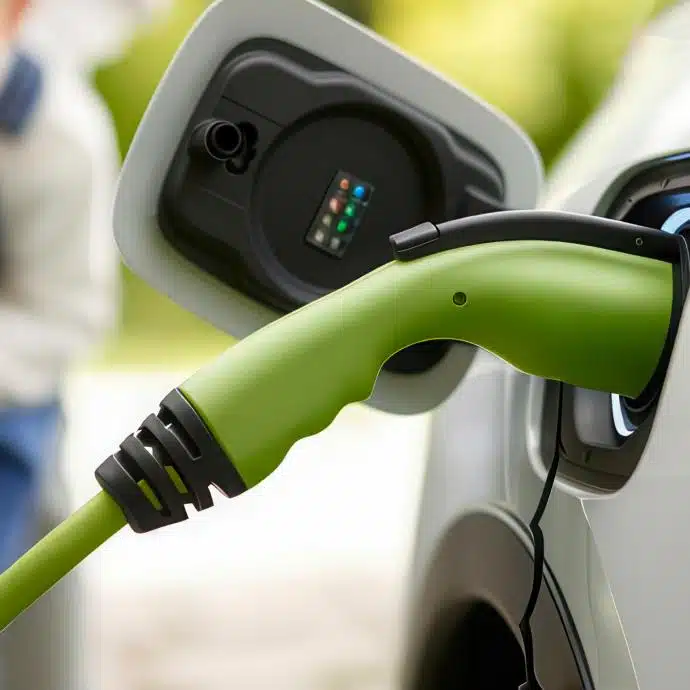
- Electric vehicles save drivers hundreds or thousands of dollars per year on fuel and maintenance, and protect drivers from wild gas price swings like we’ve had this year. EVs can provide big savings for consumers, especially with the increasing availability of used EVs.
- Data center moratoriums are popular, politically feasible, and buy time to help elected leaders better understand the issues at play in setting proper regulations and guardrails.
Moving forward, it appears that policymakers have a mandate from voters to make energy more affordable and put guardrails on data center development. Please let your elected officials know that you are counting on them, and send them a message urging them to make energy more affordable with the form here and urge them to enact an 18-month data center moratorium with the petition here.


