


This guest blog was originally published by Andrew Roberto on September 14, 2026.
There are many issues that deserve urgency today, but rushing to approve more data centers is not one of them. We have all seen the headlines from communities across the country. Too often, Big Tech appears able to build what it wants, where it wants, while residents, neighborhoods, small businesses, and ratepayers are expected to absorb the costs and be grateful for whatever benefits are promised.
That is not responsible growth.
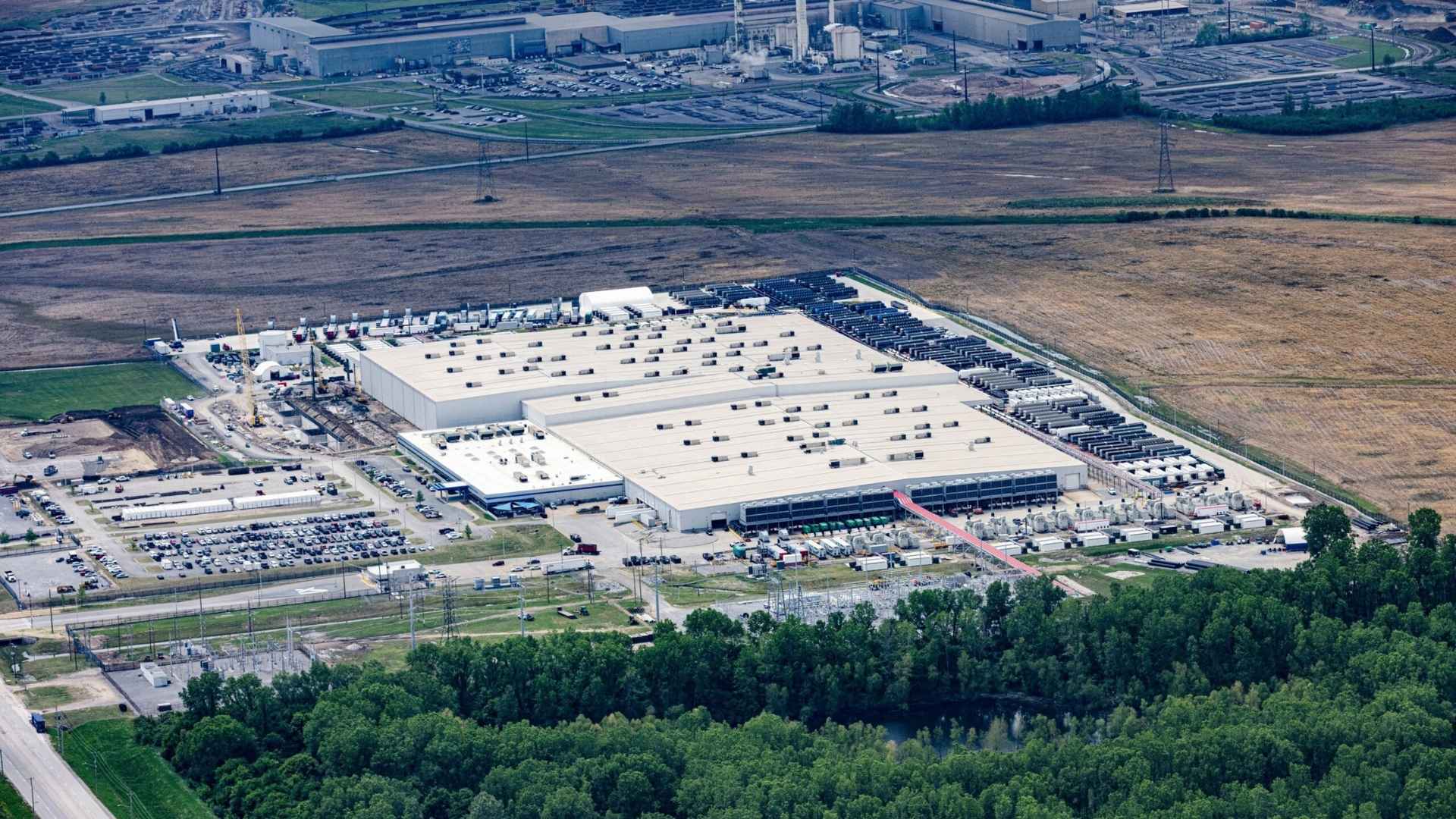
We all use data centers every day, often without realizing it. Search engines, social media, streaming videos, blockchain infrastructure, and Artificial Intelligence (AI) chatbot requests all depend on buildings packed with computers. Modern life may need data centers, but they are not all the same and are built for different purposes. A small data center for banking or information storage has a different impact on a local community than a hyperscale data center built for speculative AI. We have to establish clear standards and protections to ensure their development is honest, accountable, sustainable, and fair to the communities that will live with the consequences long after construction is complete.
Data centers are often described as the factories of the digital age, but unlike traditional factories, they usually employ relatively few people after construction while requiring enormous amounts of electricity, water, cooling equipment, and power grid infrastructure to stay online. Supporters emphasize investment, construction jobs, economic growth, tax revenue, and technological advancement. Those things matter. But they do not answer whether the long-term costs and benefits are being fairly shared. Tennessee’s appeal is tied to TVA’s reliable electric grid and historically low power costs, both of which are exactly what data centers need most.
As the number of data centers increases, communities across the country and right here in Knox County are asking reasonable questions about cost, fairness, and quality of life. Knoxville and Knox County currently have a one-year moratorium on new large data centers greater than 10 MW. That pause is not anti-technology. It reflects real concerns about facilities that operate twenty-four hours a day every day. Cooling systems, industrial fans, transformers, and backup generators can create a constant low frequency hum that disrupts neighborhoods and diminishes quality of life. Large projects also often require new substations, transmission lines, methane pipelines, and additional power generation. Those investments can cost billions.
TVA recently approved a new rate structure expected to raise electricity costs for data centers by roughly 10 percent. TVA says the change is meant to ensure large AI-related facilities pay more of the costs they place on the grid and reduce the risk that residential customers subsidize them. That is an important step, but it does not answer what the total cost will be to meet this new demand or who will pay. I question whether a 10 percent increase is enough to protect small businesses and families from absorbing costs that should be paid by the companies creating the demand.
Unlike most major utilities, TVA has no independent state regulator reviewing its rates, capital plans, or long-term infrastructure decisions. A 2026 report notes that TVA’s Board serves as both corporate manager and sole regulator of TVA’s rates, planning, and operations. That makes public transparency even more important when massive new data center demand could require billions in generation and transmission infrastructure, with investment costs that may take decades to recover.
We do not have to guess at the scale of broader infrastructure investment TVA is already planning. The same report notes that TVA has 3,570 MW of new power generation under construction, with another 1,950 MW planned. TVA also expects to spend more than $19 billion in coming years to build power generation and update its power and transmission systems. Meanwhile, TVA has already raised base rates by 4.5 percent in FY2024 and 5.25 percent in FY2025. The report warns that massive data center demand, combined with operating aging coal plants and new gas plants at the same time, raises legitimate concerns about future rate trajectories.
Some advocates dismiss local opposition as resistance to progress. But many communities are not opposing technology. They are asking whether large, well-financed companies are paying the full cost of the electricity, water, transmission lines, substations, pipelines, and generation capacity their projects require, or whether those costs and risks will leave families and small businesses paying the bill.
Many of the newest projects are tied to emerging technologies, especially AI, whose long-term returns remain uncertain. Investors may profit enormously if AI fulfills its promise, but they should also bear the risk if it does not. The concern is whether public utilities and ratepayers could be forced to absorb part of that risk without meaningful public scrutiny. And because some of these facilities support AI systems that may automate work currently performed by people, workers and their families need to ask what lasting economic opportunity they will receive in return.
A fair process should begin with public disclosure and independent expert review of projected power demand, water use, noise impacts, grid upgrades, pipeline needs, and the expected effect on residential and small-business rates. Citizens should also know what tax benefits, incentives, or major infrastructure commitments are being offered before decisions are made.
Some data centers may be necessary, but the number needed has yet to be determined. What we do know is that transparency is not optional. We should know who pays, who benefits, what risks are being assumed, and whether the rules are fair for everyone. Asking those questions is not opposition to progress. It is how communities make informed decisions about changes that affect our quality of life.

