

On Tuesday, September 15, the 4th Circuit Court of Appeals will hear challenges to the Federal Energy Regulatory Commission (FERC)’s 2024 regulation called “Building for the Future Through Electric Regional Transmission Planning and Cost Allocation,” also known as FERC Order 1920. SACE joined Appalachian Voices, Energy Alabama, the North Carolina Sustainable Energy Association, the South Carolina Coastal Conservation League, and other parties, represented by the Southern Environmental Law Center (SELC), in demanding improvements to FERC Order 1920 while nevertheless seeking to ensure it is allowed to go into effect.
America’s Grid Not Keeping Pace With Growing Needs
More transmission is needed to address new load, a changing resource mix, and extreme weather. Proactively planned high voltage transmission can more cost-effectively address these needs than the current approach of reactive, lower-voltage, short-term solutions. For example, the Department of Energy estimates that the U.S. Transmission System will need significant investment to cost-effectively meet future demand through 2050. However, the last decade shows that the pace of high voltage additions is slowing down.

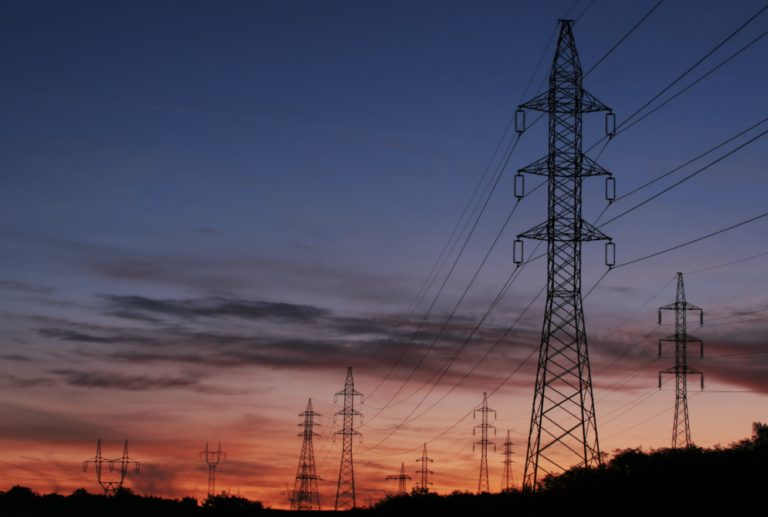
High voltage transmission serves as the grid’s arteries, moving large amounts of electricity efficiently over long distances. Their ability to move larger volumes of electricity also allows more generation to connect to the grid, which can be a less costly alternative to building smaller transmission lines one power plant at a time. Planning and building good high-voltage transmission leads to improved system-wide capacity, allowing more generators to meet greater demand for electricity across a wider geographic area, facilitating competition and driving down prices.
Common Sense Transmission Planning Not Happening In The Southeast

Long-term expansion of regional transmission will lead to individual utilities needing less new generation to meet system needs than if utilities plan for the future with just their own resources. Since utility investments are added to a customer’s electric bill, this improved connectivity will therefore create long-term savings on electricity bills.
However, that is not occurring in the Southeast. Instead, each private monopoly utility plans transmission to connect its own generation within its own footprint, leading to lower-voltage lines that avoid economies of scale and limiting the ability of utilities to share generation resources. Transmission can last 40 years or longer, and transmission built in the Southeast affects electric service across the eastern United States. For this reason, the Federal Energy Regulatory Commission (FERC) has required utilities to plan as a region since 2010 under a previous FERC order, Order 1000.
In the Southeast, the entity responsible for this regional planning is known as the Southeastern Regional Transmission Planning (SERTP) and it includes Southern Company, Duke Energy, TVA, and others. But instead of jointly planning regional transmission, SERTP utilities lump their own transmission plans together and call it a regional plan. The existing process has been rigged so that virtually none of the benefits, but all of the costs, of regional transmission expansion are evaluated.
Current Process Limits Opportunities For Efficient Long-Term Planning
SERTP utilities use a ten-year planning window and other limited assumptions that overlook foreseeable conditions affecting transmission needs. This short-term planning fails to consider a broader set of benefits of regional transmission, leading to inefficient investments based on an inaccurate portrayal of least-cost options.
Weather caused 80% of power outages from 2000 to 2023. Limited supply can raise electricity prices by tens of millions of dollars during a single event. More regional connections improve access to supply across the eastern United States, contributing to a grid that is truly bigger than the weather. Today, this benefit is ignored in planning.
Existing SERTP planning has thus generated little regional investment, while annual spending by Southern, Duke, and LG&E/KU on local transmission has ballooned from $0.5 billion in the early 2000s to $2.5 billion in 2023 and continues to trend upward — leaving ratepayers’ bills increasing for an inefficient and unreliable grid.

By leaving Order 1000 largely unchanged despite finding that it produced unjust and unreasonable rates, FERC ignored the one key problem it seeks to solve.
FERC has not required any alignment between the short-term planning of Order 1000 and long-term planning under Order 1920, or limiting short-term planning to urgent transmission needs that utilities could not have reasonably anticipated. Despite finding that existing planning processes resulted in the building of inefficient and costly infrastructure, FERC left these processes in place for the most common types of projects: smaller-scale, lower voltage lines built for individual utilities. This will allow providers to continue the very practices Order 1920 aimed to stop: building inefficient projects through a piecemeal, short-term process when comprehensive, longer-term planning would be more cost-effective.
By allowing the Order 1000 process to remain largely unchanged, utilities will have the opportunity to undermine long-term planning by building short-term solutions that “lock out” the longer-term, cost-effective options they are required to identify through Order 1920.
Left unchecked, these incentives will continue to result in limited or nonexistent investments through the regional process and substantial increases in transmission spending by SERTP utilities elsewhere. Customers are likely to continue paying more unless FERC provides the needed fix and aligns short-term and long-term planning processes.
FERC Should Be Allowed To Enforce Order 1920 While Improvements Are Made
Order 1920 is a critical reform to regional planning requirements and essential to producing a transmission system in the Southeast that can meet emerging needs in an affordable manner. It should remain in place while FERC makes the necessary modifications to realize its promise.
Order 1920 requires 7 benefits, leading to cost-effective alternatives that utilities will have to study. Under Order 1920, even if the regional transmission lines studied by utilities are not selected, the utilities will have to explain to the public why these regional solutions were rejected. That evidence can be used at state commissions to order alternative investments that are more cost-effective than the status quo. Order 1920 requires that transmission planners develop three future scenarios, currently not required by Order 1000, and that will improve identifying regional solutions. These scenarios must be based on the best available inputs about “the future electric power system” over a twenty-year horizon and will be used to identify long-term transmission needs.
Although Order 1920 should be strengthened, the need to implement its existing requirements is particularly urgent given rapidly increasing energy demand forecasts. SACE generally supports Order 1920’s planning process improvements and does not seek to remove specific requirements. A targeted remand to FERC will allow the planning process to move forward while surgical fixes are made.
A delay in FERC Order 1920 compliance will allow Southeastern utilities to continue making inefficient and costly system investments without opportunities to effectively plan the grid for the future, all at the expense of ratepayers. It is in the interest of every utility customer in the Southeast that the Court order improvements to, not elimination of, FERC Order 1920.