


When it comes to convenience, EVs really shine. Fueling mostly happens at home and eliminates the need to waste time and money at gas stations. With increased range and a rapidly expanding charging network, fueling on the go is easier than ever. Hear from Howard, a high-mileage driver, how driving electric is saving him money and time.
This article is part of a series exploring the ABCs of EVs: Affordable, Better, Convenient.
Meet EV driver Howard from Florida.

Electricity Is Everywhere
Take a look around you right now. How close is the nearest electrical outlet? Probably not far. When people argue there aren’t enough charging stations for EVs, they overlook the simple fact that most EV drivers charge at home. Most homes can support Level 1 (trickle charging) with a standard outlet, adding an average of 40 miles overnight, and some homes may need an upgrade to support Level 2 charging, but the fundamental infrastructure needed to support charging is already there.
Charge While You Sleep
About 80% of EV charging happens at home, typically overnight. Plugging in takes seconds to do, and then you can walk away with confidence that in the morning your car will be charged. It’s far more convenient than having to drive to a filling station to purchase gas. Howard, who uses his EVs for personal use and as an electric Lyft/Uber driver, elaborates: “It’s far easier for me to charge my EVs than buying gas. I have a home charging unit. It takes me about 5 seconds to plug in my EV and walk away. I currently have a total of 4 electric vehicles. All are charged at my home 95% of the time. It is very rare for any member of my family to use public charging.”
In addition to the convenience, home charging can save EV drivers significantly compared to buying gas at a pump. Howard has been able to grow his business through savings achieved by home charging. He estimates, “(the fuel) cost for each vehicle I own is less than $0.04 cents per mile vs a gas car that has a running cost of $0.15 cents per mile. The savings on fuel and maintenance costs were the deciding factors (to go electric).”
For drivers who average 1,100 miles of driving per month, that adds up to $121 or $1,452 annually in fuel savings alone! For drivers clocking over 4,000 miles per month, like Howard, the savings are spectacular.

The Need for Accessible Home Charging
The ease of home charging highlights the challenge for those who live in multi-unit dwellings, those who live in homes without off-street parking, and renters who may lack the authority to install charging infrastructure to drive electric vehicles. In addition to missing out on the convenience factor of home charging, this subgroup is forced to pay more for electricity. Electric utilities often have programs to lower the cost of electricity for EV drivers that charge at home with time-of-use rates and programs to help offset the cost of installing home charging. However, for those without access to home charging, they are forced to pay more to charge their EVs because electricity is more expensive at Level 2 and DC (direct current) fast-charging stations. Technology and policy solutions exist to support those living without home charging. One of the most efficient and affordable solutions is for developers to include charging infrastructure (building Make-Ready) when they are constructing new housing stock.
Finding Chargers Is Easier Than Ever
While Howard doesn’t rely on public charging, he has observed the uptick in availability. “I’ve been driving electric vehicles since February 2013. During that time, I’ve watched the public charging infrastructure increase over the years. With the reliability getting better within the last 6 years.” This mirrors Jayne’s experience in the article Ten Ways EVs are Better than Ever, Better Than Gas.

In the Southeast, the number of charging stations has grown dramatically in the past several years, increasing by 24% just this past year, making it easier for EV drivers to find charging away from home. There were 1,976 DC fast-charging ports and 9,840 ports total recorded in the 2020 Transportation Electrification in the Southeast Report. In the latest edition of the report, updated through 2025, there were 10,520 DC fast-charging ports and 31,930 total ports in the Southeast. Nationally, more than 64% of Americans now live within two miles of a public charging station, greatly improving access for all drivers. The increase in number and expansion of geographic distribution of the charging network make it more convenient for drivers looking to travel longer distances in electric vehicles.
Today’s EVs Have Greater Range
In addition to the buildout of charging infrastructure making charging more convenient, longer-range EVs mean drivers need to charge less often. Among 2026 electric models, average real-world range has climbed to 325 miles, a 185% increase since 2013, when EVs averaged just 114 miles, and is fast approaching the 400-mile average of gas-powered cars. As battery chemistry continues to improve, average range is expected to increase, narrowing the gap. Recurrent mapping tool shows exactly how far various models of EVs can travel, both one way and round trip.

For most drivers, the math already works out: the average Southeasterner travels just 35-40 miles per day, well within the range of any modern EV. Likewise, “Gasoline Superusers” that make up the top 10% of light-duty drivers in terms of gasoline consumption can make the switch, even with their extreme driving needs. Take Howard, who averages 4,000 miles per month driving for Uber and Lyft exclusively in electric vehicles, all while saving significantly on fuel and maintenance costs.
“In 2022 when I got my 2022 Tesla Model Y, I was averaging about 4000 miles per month which cost me less than $280 per month via FPL ($0.14 cents/kWh) at home. Compared to a gas vehicle in the same class as Model Y like the BMW X3 which would run about $2,200 per month to cover the same miles. It is fun having people do their own fuel cost calculation to figure out that I drive 5 times more than them for half the cost. When the myth appears about batteries not lasting 100,000 miles or I need to change the battery soon, I just show them the miles on my car and watch them go quiet. I’ve hurt the feelings of a few Toyota owners who brag about how long their cars are lasting. I think I’ve helped a few people cross over to EV over the years,” Howard said.
Today’s EVs Hold Their Range
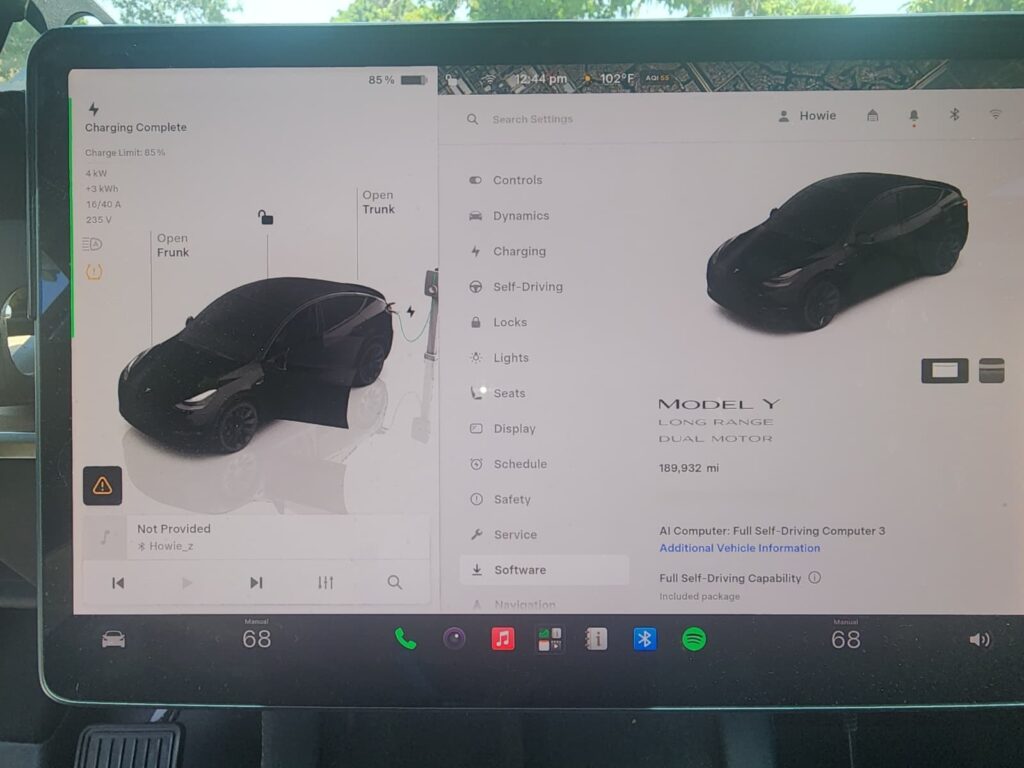
Studies with real-world data sets identify range retention varies by model, and is impacted by battery chemistry, and to lesser extent by how the battery is primarily recharged (Level 2 vs DC fast-charging). With modern battery management systems and improved chemistry technology, the average EV retains high-level performance in range, averaging about a two percent loss annually. That has been the experience of Howard, who breaks down the starting and current range of his EVs, which are accruing years’ worth of miles in a compressed timeframe.
| Model and Year | Range New (miles) | Current Milage | Current Range (miles) |
| 2019 Nissan Leaf | 150 | 66,000 | 145 |
| 2023 Chevy Bolt EUV | 250 | 68,000 | 245 |
| 2021 VW ID.4 | 250 | 108,000 | 200 |
| 2022 Tesla Model Y | 310 | 186,000 | 250 |

Fueling on Your Terms
Forget gas stations. EV drivers fuel at home, overnight, for a fraction of the cost of gasoline. Imagine driving straight home, without having to touch icky pumps. Just plug in, walk away, and wake up charged up. When road tripping, a rapidly expanding network of charging stations makes fueling while traveling easier than ever. Driving today’s longer-range EVs means there’s less need to stop and plug in, too. High-mileage drivers like Howard, who can log over 4,000 miles a month, demonstrate that convenient, affordable, and better electric driving is a great option for the rest of us too.
Resources
Yale Climate Connections | How to charge an EV if you’re a renter
ABCs of EVs
Visit our ABCs of EVs page to discover why EVs are more affordable, better, and more convenient than their gas counterparts. Get real-world insights from our community of EV drivers, and explore our ABCs of EVs one-page guide with links to resources.

