

Press Mention WFAE November 8, 2021
SACE Quoted
Infrastructure bill has money to help North Carolina expand electric vehicle charging
In this mention
The $1.2 trillion federal infrastructure bill provides $109 million to North Carolina for expanding electric vehicle charging stations, with an emphasis on equitable deployment to rural and underserved communities. Stan Cross of the Southern Alliance for Clean Energy highlighted the importance of reaching traditionally underserved areas. North Carolina must submit a detailed deployment plan to access the federal funding.
There is a focus on equitable disbursement of this charging infrastructure, getting it to the places where it's needed, including our rural communities, as well as low- to moderate-income and other traditionally underserved communities across the country and across our state
Stan Cross
Original clipping
PDF didn't open? Open it in a new tab →
Full transcript
Infrastructure bill has money to help North Carolina expand electric vehicle charging
WFAE |
By David Boraks
Published November 9, 2021 at 5:36 PM EST
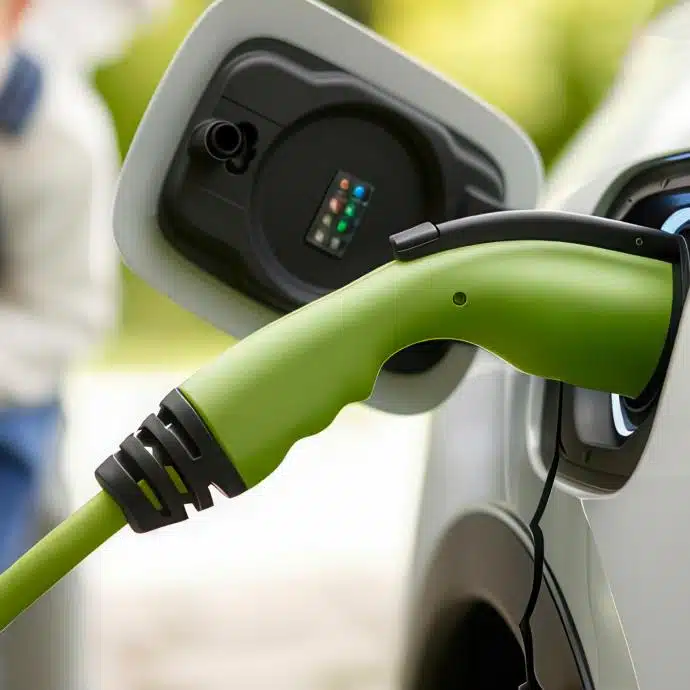
Electric vehicle charging stations are seen at the city-county parking deck in Charlotte.
The $1.2 trillion infrastructure bill that passed a final vote in Congress on Friday will help speed up electric vehicle adoption in North Carolina.
The bill provides $7.5 billion nationwide over five years, including $109 million in North Carolina, to expand electric vehicle charging stations. North Carolina governments and organizations also can compete for another $2.5 billion in grants available nationwide for vehicle charging.
Stan Cross of the Southern Alliance for Clean Energy said the money could help address North Carolina's lack of a wide-reaching network.
"There is a focus on equitable disbursement of this charging infrastructure, getting it to the places where it's needed, including our rural communities, as well as low- to moderate-income and other traditionally underserved communities across the country and across our state," Cross said.
Transportation is the state's second-largest source of greenhouse gas emissions that contribute to global warming. North Carolina and the South overall lag other parts of the country when it comes to adoption of electric vehicles. Drivers say concern about vehicle range and charging are the biggest barriers.
To get the federal funding, North Carolina must submit a detailed plan deploying charging stations, said Carly Olexik, a spokesperson for the state Department of Transportation.
"NCDOT will work collaboratively with other state agencies, including the North Carolina Department of Environmental Quality and Department of Administration, to develop this plan," Olexik said.
She said the additional grants are available to a variety of applicants, including state and local governments and regional planning agencies. Olexik said 50% of the grant funding will go to communities, "with priority given to rural areas, low and moderate-income households, communities with limited private parking, or high rates of multi-unit dwellings."
The bill is now awaiting President Joe Biden's signature.