

This article was originally published by Invest in Our Future on August 6, 2026.
Our team at Invest in Our Future believes that faster clean energy deployment will require building deeper public support, strengthened by the stories and enthusiasm of community members who are already reaping its benefits. All over the country, clean energy projects are generating direct jobs and savings — and there are now countless local champions who can speak authentically about how clean energy has made their lives better.
Today we’re highlighting the story of Mayor Mondale Robinson of Enfield, North Carolina, who joined our Congressional Fly-In in June, exchanged ideas with dozens of other local clean energy leaders as part of our Builders Network, and spread the word on Capitol Hill about how his small town is relentlessly pursuing clean energy sources.
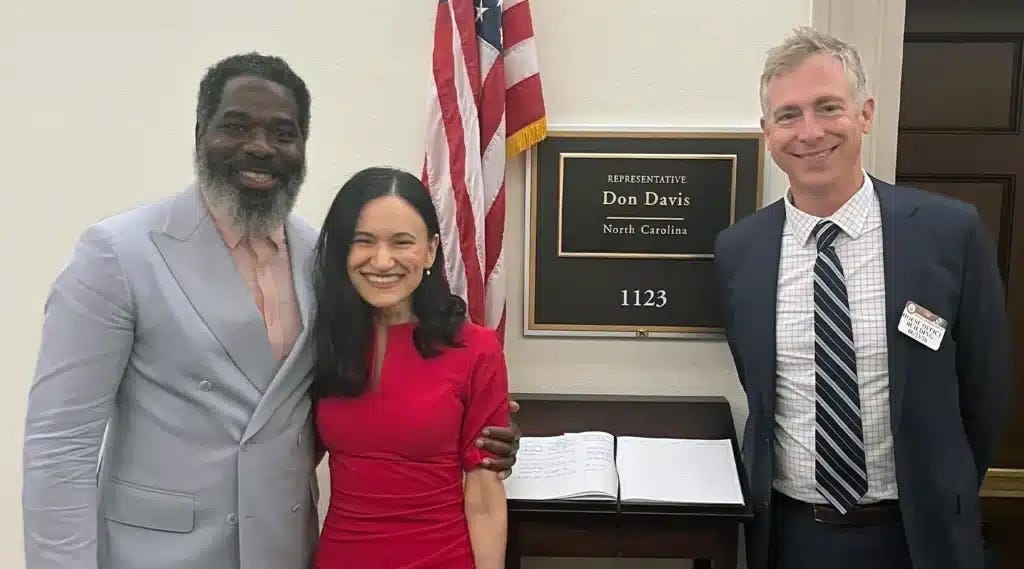
As Mayor Mondale Robinson walked the halls of Capitol Hill during the Builders Network Fly-In in June, he didn’t deliver a technical briefing on geothermal energy or advocate for a single federal program. He came to tell the story of his hometown.
Enfield, North Carolina, is a rural town of roughly 3,000 people where generations of residents have watched jobs disappear, investment dry up, and opportunity become harder to find. Like many rural communities across America, Enfield has spent decades being defined by what it has lost rather than what it has to offer.
For Mayor Robinson, those challenges are personal. He built a career away from home as a political organizer and strategist, working on campaigns and advocacy efforts across the country. But success elsewhere never changed his commitment to the place he calls home, and he eventually returned to Enfield with a simple conviction: Rural communities deserve the same opportunities as ‘big city America’ — and maybe even more so.
Today, his conviction is taking shape through one of the country’s most ambitious small-town revitalization efforts: Enfield has plans to build energy-efficient affordable housing, solar installations, and one of the first community-scale geothermal heating and cooling networks in the entire Southeast.
Mayor Robinson is quick to point out that, while these are clean energy projects, they’re also community-building and economic development projects. They hold the promise of lowering utility bills for families living with some of the highest energy burdens in the state, creating jobs that allow young people to build careers without leaving home, and attracting investment to a town that has too often been overlooked. And they can prove that rural communities can lead innovation, not just benefit from it.
That’s the story Mayor Robinson brought to Washington when he attended the Builders Network Fly-In, by way of network members Generation180, Southern Alliance for Clean Energy (SACE), and Southeast Sustainability Directors Network (SSDN). And it’s exactly why the Builders Network exists.
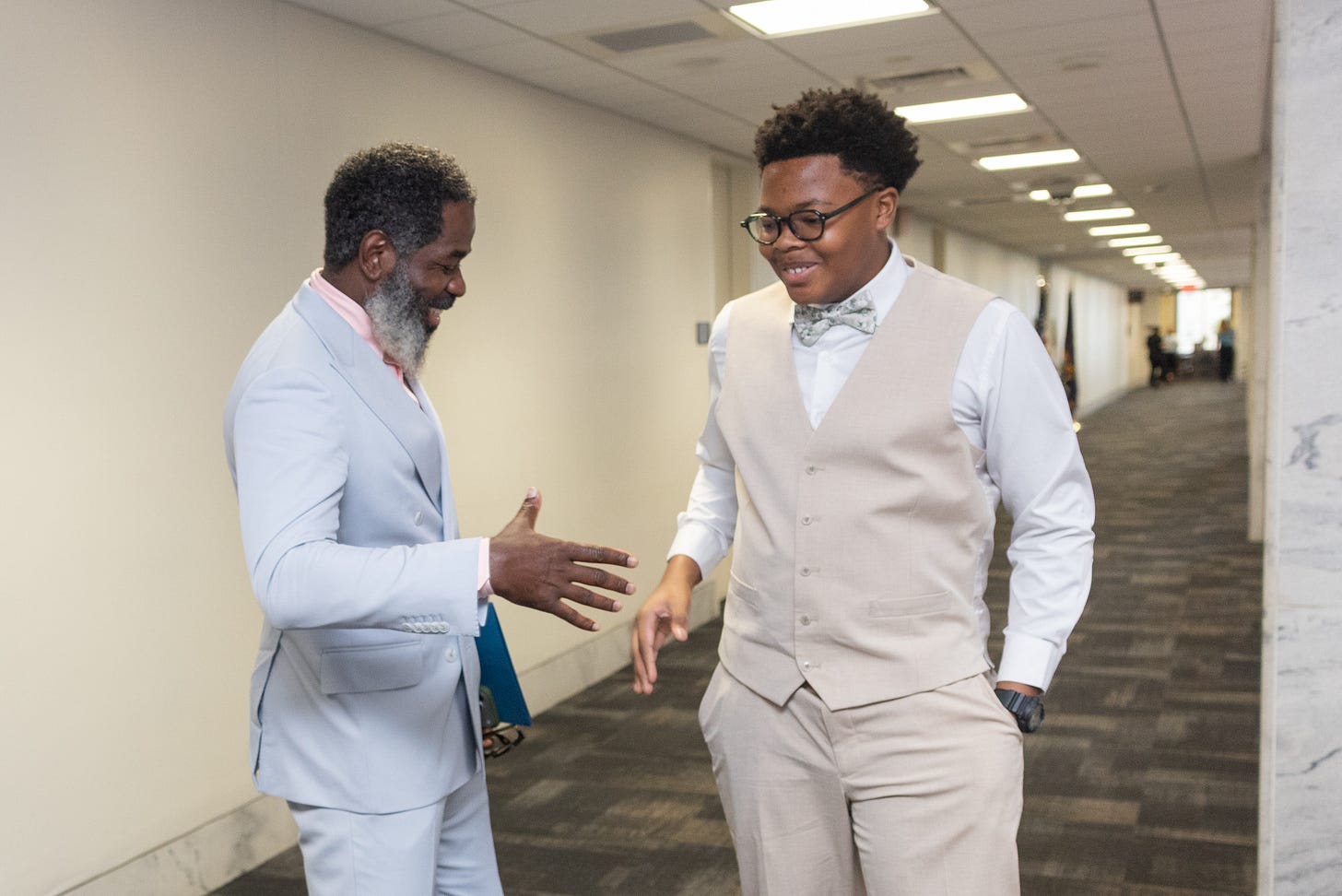
Too often, conversations about federal energy policy focus on tax credits, permitting reform, grid modernization, or megawatts deployed. Those policies matter, but local leaders experience them differently. Local leaders see whether a family can afford to cool their home in July. They see whether an abandoned building becomes affordable housing. They see whether a new infrastructure project creates work for local contractors. And they know what their community needs to compete for the future.
Mayor Robinson shared that perspective in meetings across Capitol Hill.
Rather than leading with policy, he led with people. He talked about neighbors, not numbers. About what decades of disinvestment look like from the ground, and what becomes possible when communities finally have the tools to chart their own future.
Again and again during the Builders Network Fly-In, those kinds of conversations proved to be the most persuasive. Across dozens of congressional meetings, participants found that firsthand stories about affordability, economic opportunity, workforce development, and local resilience resonated far more deeply than technical policy discussions alone. Members and staff wanted to understand the impacts of federal decisions once they reached communities like Enfield. That’s what makes local leaders such powerful advocates.
Washington has no shortage of policy experts. What it needs are more builders — mayors, business owners, workforce leaders, educators, and community advocates who are translating policy into tangible results every day. They remind policymakers that every debate over energy, infrastructure, or economic development ultimately comes down to whether communities have the opportunity to thrive.
Mayor Robinson didn’t travel hundreds of miles to ask Washington to save Enfield.
He came to show what’s possible when local leaders are empowered to build the future they envision for their communities.
When builders lead the conversation, policy becomes personal. And that’s where lasting progress begins.
Check out more inspiring stories on Invest Our Future’s Substack and Energy For All Y’all.

