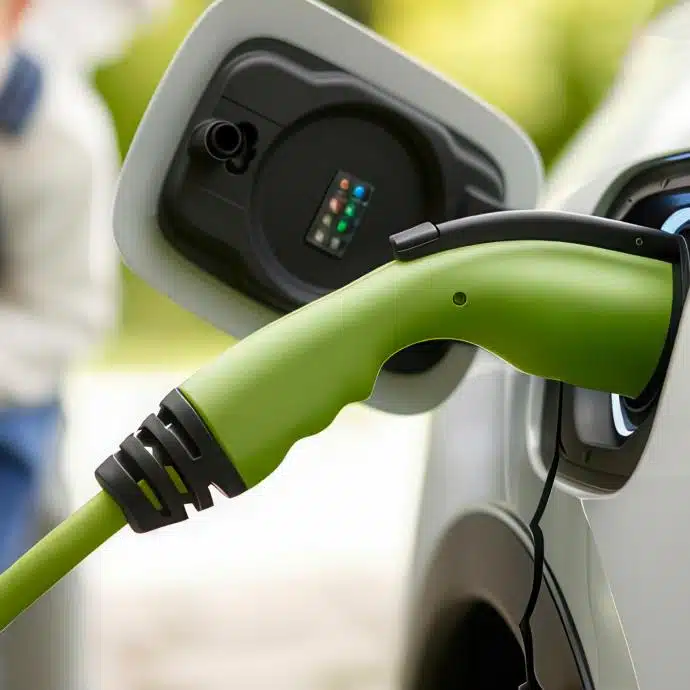


The growth of electric vehicles (EVs) and charging infrastructure must advance in tandem, particularly reliable fast-charging stations that function as the modern equivalent of gas stations for long-distance EV driving. This interdependence is crucial: though 80% of EV charging happens at home, EVs require accessible public charging infrastructure to make long-distance travel feasible for drivers, while charging stations depend on growing EV adoption to sustain their operations. The Southeast U.S. has emerged as a critical region in this ecosystem, leading the nation in EV manufacturing and posting strong sales growth, underscoring the importance of building robust regional charging networks to sustain momentum.
Pulling the Plug
This critical relationship between the EV and charging infrastructure markets is what inspired the 117th Congress to fund the $5 billion National Electric Vehicle Infrastructure (NEVI) program as part of the Bipartisan Infrastructure Investment and Jobs Act, also known as the Bipartisan Infrastructure Law. The NEVI program’s goal was to jump-start a reliable, accessible cross-country interstate charging network along America’s highways.
Beginning in 2022, NEVI funds were made available to state Departments of Transportation (DOTs), including $679 million to the states SACE works in: Florida, Georgia, North Carolina, South Carolina, and Tennessee. State DOTs engaged stakeholders to create state-specific EV infrastructure plans, had the plans approved by the federal government, and, by the end of 2024, began installing the NEVI network at scale.
While the NEVI program was advancing, the EV and charging infrastructure markets were growing rapidly. From 2020 to 2024, EV sales averaged 47% annual growth, while the number of public EV charging stations doubled, reaching 200,000. Which is why it is no surprise that, as the Trump Administration took the reins and ramped up its efforts to slow the country’s transition to electric transportation, it unlawfully froze funding for the NEVI program, a literal attempt to pull the plug on EVs.
Not so Fast, Mr. President
Like many of the Trump Administration’s efforts to claw back clean energy funding that Congress had appropriated and that only Congress has the legal authority to reconsider, the freezing of NEVI funding was ripe for a court challenge. The lawsuit was brought by attorneys general of nearly two dozen states, including North Carolina, and a handful of nonprofit groups representing states without participating attorneys general, including SACE. We were granted standing to represent our members in Florida, Georgia, North Carolina, South Carolina, and Tennessee because they reside in those states, drive or want to drive an EV in our region and beyond, and were willing to testify about the negative impacts the funding freeze had on them.
Last week, U.S. District Court Judge Tana Lin of the Western District of Washington entered final judgment in favor of the plaintiffs, requiring the federal government to honor its commitment and fully fund the NEVI program. The Court’s order clears the way for states to implement the NEVI plans they have worked for years to develop, and permanently bars the federal government from unlawfully withdrawing states’ funds or interfering with states’ implementation.
The Court’s ruling is a victory for the plaintiffs, EV drivers, and the EV, battery, and charging infrastructure companies that have invested over $193 billion in domestic manufacturing, as well as the over 211,000 American workers who are filling the jobs these investments are creating, including in the Southeast—a critical manufacturing hub for electric vehicles.
Dr. Stephen A. Smith, Executive Director of Southern Alliance for Clean Energy, said, “This is a great victory for clean energy while also overcoming an unnecessary roadblock to critical funding on the road to bringing the United States and our Southeast region into the 21st century. Electric vehicles, both large and small, are more efficient, have lower maintenance and fuel costs, and perform better than fossil fuel-powered vehicles. Electric mobility, with the significant electric vehicle manufacturing and growing battery supply chain infrastructure in the Southeast, brings good-paying jobs and makes our region and our country competitive as the world moves to an electric future. We are proud to be a part of the coalition that defeated this administration’s unlawful harassment of legally appropriated funds to grow the charging infrastructure necessary to build consumers’ confidence in driving electric.”
SACE Members Speak Up to Unlock NEVI Funds for Southeast States
As a region manufacturing EVs for the nation, the Southeast needs a reliable charging network that matches its production capacity. This is especially important now when many Southeastern families face affordability challenges. Access to reliable charging infrastructure removes a key barrier to EV ownership, and EVs offer a clear affordability solution—cheaper to operate and maintain than gas cars.
While 17 states initiated the legal challenge in April, no Southern states joined at the outset. Because only states that were formal parties to the lawsuit were guaranteed to benefit from the Court’s ruling, this created a real risk that the Southeast would be left out if the Court declined to grant nationwide relief. That is where SACE came in.
SACE is a member organization with over 35,000 members across the Southeast. We reached out to EV-driving and would-be EV-driving members in Florida, Georgia, North Carolina, South Carolina, and Tennessee who were harmed by the NEVI program’s cancellation. Members from each state provided SACE’s legal partner, the Southern Environmental Law Center, with witness testimony describing how the lack of reliable, accessible fast charging along the region’s highways negatively impacts their ability to safely and securely own and operate an EV and reap the affordable, clean transportation benefits they sought.
Because of member testimony, SACE was granted standing in the lawsuit and served as a proxy for the states whose attorneys general chose not to participate, thereby allowing Southeastern states access to the region’s $679 million of NEVI funds. SACE and our members’ participation helped hold the Trump Administration accountable for its unlawful actions.
The successful outcome of this lawsuit ensures that the national EV fast-charging network will run through, not around, the Southeast. This is a win for the future—supporting the region’s job-creating EV supply chain manufacturers and helping remove a critical barrier to EV adoption by expanding drivers’ access to clean, affordable electric transportation through an accessible, reliable charging network.

