

A condensed version of this piece was first published in Statehouse Report and the Charleston City Paper.
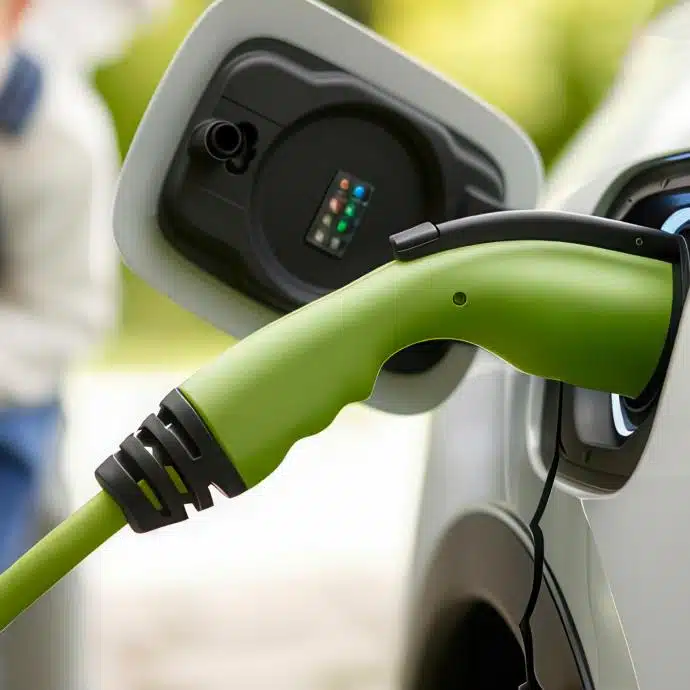
South Carolina legislators are considering an increase in state fees on electric vehicles (EVs) to $400 every two years, up from the current $120 biennial fee — a 233% increase. This EV fee is paid in addition to the standard costs required for all vehicles, including registration fees, local property taxes, and a one-time infrastructure maintenance fee (which are already among the highest in the nation).
While the stated reason for this exponential increase — roadway repair funding — is important (those potholes aren’t going to fix themselves), our leaders should carefully weigh the broader equity, economic, and national security implications of this decision. Placing disproportionate financial burdens on EV adoption creates new problems rather than solving existing ones.
As a U.S. Army veteran deployed in Asia, energy use was not an abstract concept; it was a constant operational constraint. Modern military operations depend heavily on fuel logistics, from transporting supplies to powering advanced defense systems. Every gallon of fuel requires extensive coordination, increases costs, and creates additional vulnerabilities in contested environments. Reducing dependence on fuel through expanded use of advanced energy technologies and domestically generated energy sources like solar and battery storage is not just about long-term reliability and cost stability. It strengthens operational readiness, lowers long-term costs, and reduces risk to service members and national security.
Expanding EV adoption supports that same principle at home by reducing America’s dependence on oil — one of our most persistent national security risks tied to global energy markets. Discouraging this transition by implementing an EV fee more than three times higher than the current rate keeps the United States tied to volatile global energy markets that competing nations can (and sometimes do) influence. This is a clear national security risk, and it feels especially tangible today as Americans watch gas prices surge amid instability in the Middle East and disruptions to critical shipping routes like the Strait of Hormuz. Historically, competition over oil and energy resources has played a role in many international conflicts.
There is also a clear path forward to improving national security and reducing global conflict: transitioning to American-produced energy. This approach is affordable, locally sourced, and more resilient — reducing long-term costs while strengthening domestic energy security and protecting land and water resources. As the United States connects more diverse energy sources — particularly solar and battery storage — to the grid, the transition to electric vehicles plays a critical role in reducing reliance on global fuel markets.
A more nuanced view of national security must also include economics. The United States is in a global race to build a competitive EV industry and secure domestic supply chains for batteries and key industrial materials used in battery manufacturing. Reducing reliance on overseas competitors — particularly China, which dominates much of this market — requires continued investment and adoption of these technologies here at home.
South Carolina is already part of that solution. Right here in the Palmetto State, companies like Redwood Materials and Phenogy are working to build a domestic battery supply chain, while manufacturers such as Scout Motors and BMW are investing in the future of next-generation transportation. And South Carolina isn’t just attracting EV assembly plants — it is becoming a hub for the entire electric vehicle supply chain, including EV component manufacturing leaders like Envision AESC and Cirba Solutions.
South Carolina’s EV sector is not just about innovation — it’s also about jobs, economic development, and long-term affordability. EVs typically offer a lower total cost of ownership than gasoline-powered vehicles, which matters for families already navigating rising costs of living. Policies that discourage adoption don’t just affect consumers — they signal to companies like Polestar, Oshkosh, and Volvo that South Carolina may be less committed to the next generation of vehicle technology. That kind of signal risks slowing investment, weakening local job growth, and limiting the economic momentum already taking root in our state.
If the goal is fairness, road maintenance funding should be based on how much we use the roads — not which fuel powers our vehicles.
A flat $400 fee is not usage-based; it requires drivers to pay the same amount regardless of how much they actually use the roads. This approach overcharges low-mileage commuters while failing to reflect the true drivers of road wear.
More effective, equitable alternatives already exist. Mileage-based user fees, like a program currently being piloted in Utah, charge drivers based on how much they actually drive, regardless of vehicle fuel type. Other options, such as weight-based registration or modest tire fees, better reflect real road wear while remaining technology-neutral. These approaches ensure fairness without discouraging innovation or adoption of newer, more efficient technologies.
Domestic energy security for South Carolina means diversifying how we power our vehicles and grow our economy. Penalizing that progress drives us in the wrong direction — economically, strategically, and competitively.
We shouldn’t be inequitably taxing the very transition that strengthens our economy and our national security.