


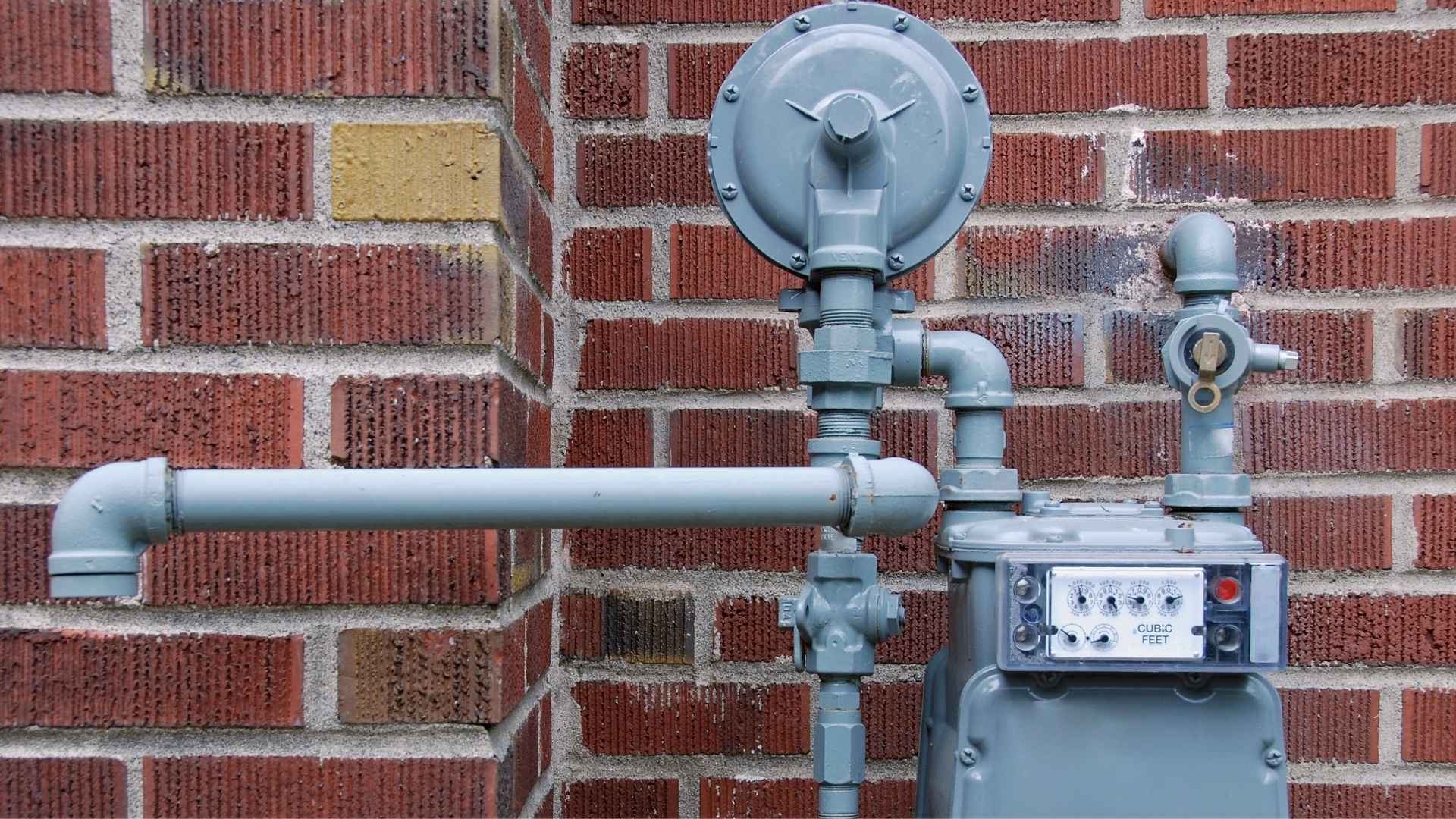
We get our heating and cooling from three main types of providers, and sometimes they resemble a trio of siblings. There’s the eldest child — the legacy electric utilities like Duke Energy or Georgia Power. There’s the youngest child — the renewable energy providers that operate at both grid scale and behind the meter (solar, wind, batteries). And then there’s that middle child — the gas local distribution companies (LDCs) like Piedmont Natural Gas and PSNC Enbridge (formerly Dominion). The middle child often flies below the radar and doesn’t attract the attention that the oldest and youngest get. One particular middle child, PSNC Enbridge, has been overlooked in North Carolina. Let’s see what they’ve been up to.
Persistently Over-Estimating Gas Need
The consulting group London Economics International took a look at how PSNC Enbridge estimates how much gas capacity it will need to buy from the big interstate pipeline companies. These estimates determine just how big new pipeline projects are. This is important because these pipeline costs are passed straight to ratepayers, and PSNC Enbridge has no risk and no incentive to look out for you, the ratepayer.
The gas resources PSNC Enbridge needs, called design day demand, are based on what is required to meet the demand of 655,000 customers on the coldest day of the year. LEI found that PSNC Enbridge
- Starts with a baseline that is higher than historical data indicates it should be
- Uses 70 years of temperature data to find the coldest day, while most LDCs use 40 years of data (inflating design day demand)
- Adds another 9% they call a “kick factor” to calculate what would be needed on the coldest day
- Consistently overestimates the annual rate of future demand growth
These all add up to PSNC Enbridge contracting for way too much capacity on expensive new interstate pipeline projects. The company has no real incentive to not overestimate the amount of interstate capacity it needs and no incentive to negotiate the best rates for that capacity. All this adds up to higher bills (talk about a “kick factor”).
North Carolina Rate Increase Approved
A proposed Duke Energy rate increase has gotten quite a lot of press (Duke is giving that eldest sibling energy). But the middle child, PSNC Enbridge, has just scored its own rate increase, resulting in no news coverage whatsoever. The North Carolina Utilities Commission gave the middle child an early Christmas present when it approved a rate increase for the gas customers of PSNC Enbridge on December 3.
For residential customers, the rate increase is bigger in the winter than in the summer, right when home gas consumption hits its peak. That’s another unwelcome “kick factor.” PSNC Enbridge calculates that the rate increase will be about 7.2% for residential customers.
Big Profits for Shareholders
PSNC Enbridge is part of the larger Canadian pipeline developer Enbridge Inc. Thanks to all of the new pipeline construction (including the T-15 project in North Carolina), Enbridge just increased its profit projection for 2026 by 4.12% to $14.5 billion. The company also increased its shareholder dividend by 3%.
PSNC Enbridge is building the expansion of the T-15 gas pipeline in Rockingham, Caswell, and Person Counties, a $700 million project to serve two gas plants being built by an “elder sibling” company, Duke Energy. Duke maintains that new data centers are driving demand for electricity, which drives the utility to claim it needs to build new gas plants and thus drives more demand for gas pipelines. But are these data centers being built for the same artificial intelligence boom that is headed for a bust? The head of Google parent Alphabet, Sundar Pichai, spoke to BBC News just last month.

So in sum, the middle child is over-estimating gas needs, contracting for too much expensive interstate pipeline capacity, building expensive pipelines, crediting/blaming AI and data center growth, and running to the NC Utilities Commission for a rate increase (and there will be more to come). Profits from all of these activities funnel up to shareholders while North Carolina billpayers struggle.
It’s time to pay closer attention to these middle children of the energy space – the local gas distribution companies. No more flying under the radar.