

The Surface Transportation Reauthorization (STR) bill is one of the most consequential pieces of legislation that most Americans have never heard of. Passed just once every five years, it funds the entire backbone of the nation’s transportation network, from highways and rail to ports, public transportation, and the charging infrastructure that powers electric vehicles (EVs). It is, in short, a blueprint for how we move people, goods, and services.
The current STR bill must be passed by the end of September, with Republican leadership pushing hard to get it done before a potential shift of power in the House. If Congress misses the deadline, a one-year extension will keep funding flowing, but delay the urgent investments our communities need. The stakes could not be higher. And for advocates of clean air, climate change, economic opportunity, and public health, this bill represents a rare and powerful opportunity to move our transportation system from its polluting past towards a cleaner and more affordable future.
The last STR — the Infrastructure Investment and Jobs Act, also known as the Bipartisan Infrastructure Law — made historic investments in clean and affordable transportation, including EV charging, clean school buses, and zero-emissions transit. Those investments are now up for renewal. Congress must not only reauthorize them — it must expand them.
Tell Congress: Stand Firm for Clean, Affordable Transportation
Regional focus: Charging, freight, and school buses
The Southern Alliance for Clean Energy (SACE) is focused on three key elements of STR that significantly affect climate, public health, affordability, and economic development in our region:
- Lack of EV charging infrastructure makes it harder to own and operate EVs, which are more affordable, better, and more convenient than owning a gas vehicle
- Though freight traffic accounts for roughly 10% of the nation’s vehicle miles traveled annually, it is responsible for approximately 25% of the greenhouse gas emissions and a third of the air pollution impacting public health from the transportation sector
- Children riding diesel school buses are exposed to high levels of toxic exhaust — including nitrogen oxides, sulfur dioxide, carbon monoxide, and fine particulate matter — that can be 4-12 times higher inside the bus than ambient air and trigger asthma, reduce lung function, and cause long-term health issues
Charging forward on EV infrastructure
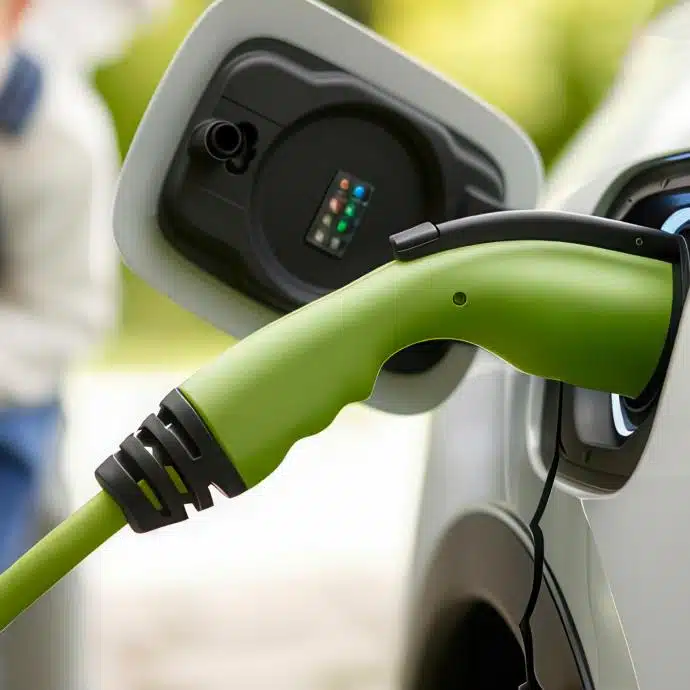
The National Electric Vehicle Infrastructure (NEVI) and Charging and Fueling Infrastructure (CFI) programs have been game-changers. Since 2025, these programs have spurred $426 million in private-sector investment in charger manufacturing alone. They support over 11,200 jobs and provide EV charging that delivers electricity to EVs, which in turn deliver an estimated $4–5 million annually in health cost savings by reducing tailpipe pollution.
But, over the past year, the Trump Administration has withheld, and Congress has recinded much of the funding for these clean and affordable transportation infrastructure programs, creating market uncertainty and leaving projects that had been awarded in limbo.
Which is why Congress must act and deliver an STR that restores certainty in these programs. That means building a nationwide, publicly accessible charging network that serves all drivers and all vehicle sizes. It means prioritizing charger maintenance and reliability, the single biggest factor in consumer trust. And it means ensuring underinvested communities get technical support so that EV adoption doesn’t deepen existing inequalities.
For rural America in particular, smart placement of chargers is about economic development, not just convenience. When travelers stop to charge, they eat at local restaurants, shop at local stores, and put money back into rural economies. Increased charging infrastructure also creates jobs — results from a study by The International Council on Clean Transportation and the International Brotherhood of Electrical Workers found that growth in charging infrastructure could create more than 160,000 jobs by 2032.
Clearing the air on clean freight
Every day, millions of Americans live, work, and go to school near highways, ports, and warehouses where diesel trucks and idling ships poison the air. The health toll is enormous and largely invisible in national policy debates. The STR is an opportunity to change that.
Four federal clean freight programs — the Reduction of Truck Emissions at Port Facilities, CFI, the Clean Ports Program, and the Clean Heavy Duty Vehicle program — have collectively invested nearly $3.5 billion since their launch. The results are striking:
- $4.2 billion in private sector medium- and heavy-duty vehicle (MHDV) manufacturing announcements
- 8,500 new manufacturing jobs
- 1,000% growth in zero-emission MHDVs from 2022 to 2024
These programs also shield American businesses and consumers from volatility. Zero-emission trucks run on electricity, not diesel, meaning companies that electrify their fleets are insulated from fuel price spikes that ripple through supply chains and raise the price of everyday goods.
There is also a competitiveness argument that should resonate across party lines. China already mandates shore power at ports, allowing vessels to turn off their diesel generators while docked. The European Union requires it at all ports as of 2025. Our region is home to some of the busiest ports in the country — Savannah, Charleston, and Miami — and without continued investment, American ports will fall behind in the global race for clean freight leadership.
Protecting children, communities, and commuters
The school bus fleet is the largest public transportation fleet in the United States — and one of the most polluting. Twenty-five million children ride diesel buses to school every day, breathing exhaust during some of the most critical years of their physical development. Reauthorizing the Clean School Bus Program is not just good policy; it is a moral imperative.
Across our region, school districts are already adopting electric school buses to save money. One rural school district was spending $0.60 per mile on diesel fuel for buses, but after switching to electric buses, it now spends only $0.12 per mile on electricity. That’s 80% savings per mile, adding up to as much as $12,000 in fuel savings per month across the school district’s seven electric school buses.
Beyond school buses, the STR must significantly expand investment in public transit. Transit riders save up to $13,000 per year compared to driving. Buses are more than 30 times safer per passenger-mile than cars and trucks. Replacing aging transit buses through the Low- and No-Emissions Bus Program could generate $15–20 million in annual health cost savings. And transit-oriented communities see far fewer traffic fatalities overall.
The next STR should also streamline grant processes so that federal dollars stretch further, delivering more zero-emission vehicles and more capital projects per taxpayer dollar spent.
The window is open, but not for long
The STR has historically been a bipartisan vehicle. The investments it funds benefit red states and blue states alike. Many of the nation’s electric school buses are manufactured in the Southeast. Clean freight manufacturing jobs are being created in communities across the country. EV chargers in rural areas serve drivers regardless of how they vote.
This bill is also a test of political will. The transportation sector is the single largest source of greenhouse gas emissions in America. The STR has historically enabled that reality, but it doesn’t have to. With the right investments, it can help dismantle it.
Congress must restore certainty in EV charging programs, expand clean freight investment, and grow public transportation funding, including reauthorizing the Clean School Bus Program. The infrastructure we build today will shape how the next generation of Americans move — and how clean the air they breathe is.


