


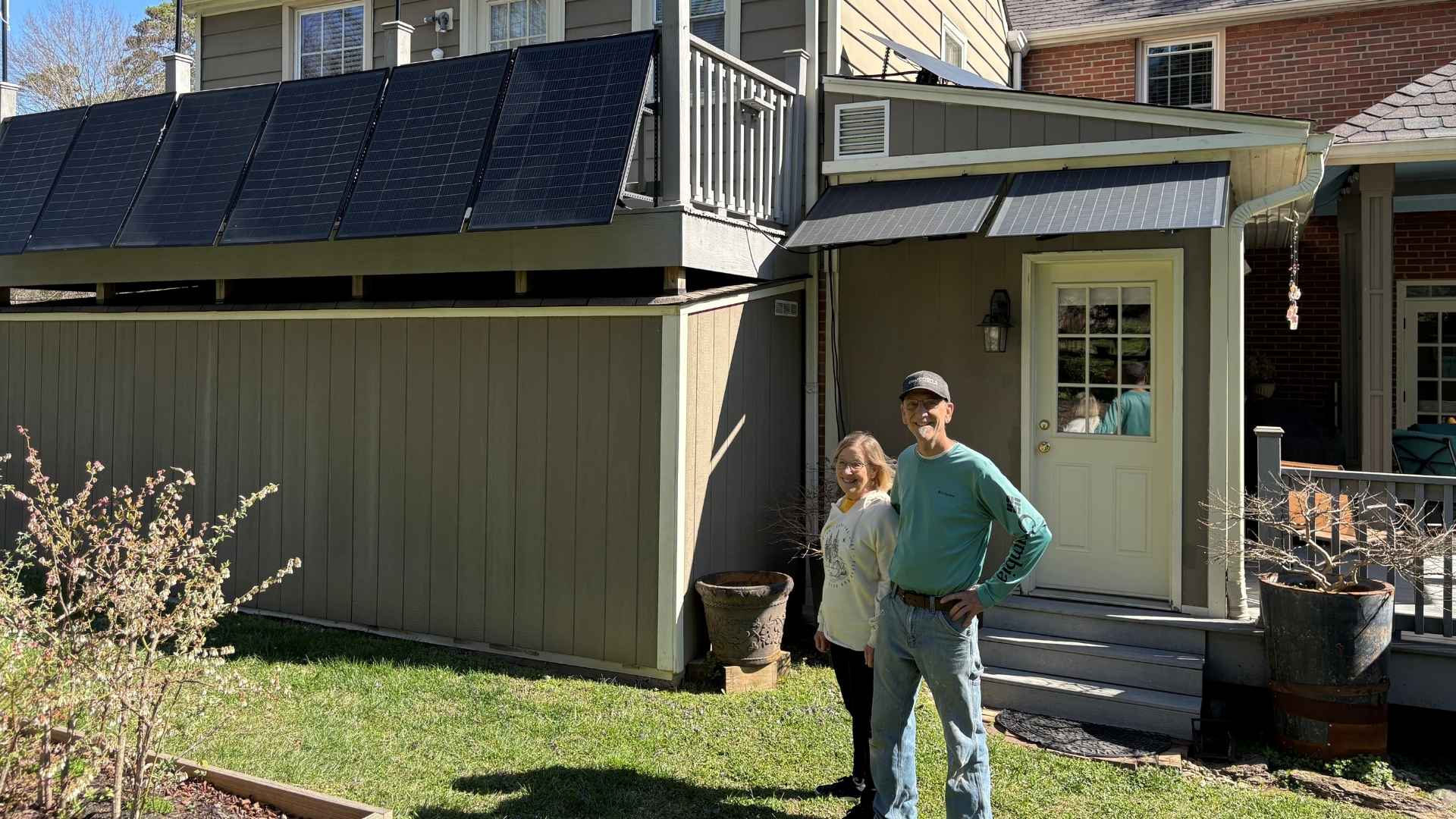
In Maryville, TN, Richard and Mary Cawthorn have found a simple way to bring solar power home, literally plugging it into the wall.
The couple installed a plug-in solar system that has now been running for about six months. Their setup currently generates about 2,400 watts (2.4 kilowatts) of electricity, starting with a smaller system and expanding after their initial success.
The Cawthorns’ interest in solar is part of a long-standing commitment to environmental issues.
“We’ve been interested in environmental concerns our whole lives, basically,” Mary said. “I was in my formative years when the gas crisis happened in ‘73, and at that point I realized this is a finite resource, you need to try to conserve it.”
While environmental concerns motivated them, Richard says the economics of plug-in solar were also compelling.
“From a financial standpoint, it’s so economical to invest in this,” he said.
A More Approachable Alternative to Residential Solar
The couple had initially looked into traditional rooftop solar but found the process discouraging.
“Contractors we talked to originally were just ridiculously expensive, and they really didn’t even talk to us because our project was so small.”
Installing a full rooftop solar system can be a complicated endeavor, from structural issues due to age to a lack of sunlight due to tree cover. The Craftstrom plug-in system offered a more accessible alternative.
“For a small project, people were willing to help us all along the way to get this system up and going,” Richard said. “It’s a do-it-yourself ordeal, just plug it in.”
Plug-in solar provides an option for anyone looking to improve their energy affordability — renters, apartment dwellers, or homeowners with HOA restrictions on rooftop solar. Although plug-in solar likely won’t cover the whole home’s energy use, it can save consumers 15-25%, depending on location and sun exposure.
Plug-in solar is already taking off in Europe, where systems can be purchased at hardware stores or even IKEA. Germany alone has approximately 1 million registered units and an estimated 4 million units in operation. Many European countries require users to register their systems with utilities and abide by a 600-1,200 W capacity limit.
Many states have legislation in progress to allow for no interconnect agreements for systems under a certain capacity. Utah, Virginia, and Maine are among the most recent states to pass or consider legislation. In the Southeast, both South Carolina and Georgia have legislation in process.
Plug-in solar systems currently cost around $1,000-$2,500 for a 400-1,200 W system. Costs will likely decrease as more states pass legislation and incentivize more products to join the market.
Getting Permission from the Local Utility Turned Out to be Surprisingly Straightforward
Mary Cawthorn said their first step was to contact the city utilities office and explain the concept, which is still new to many utilities in the Southeast.
“They were just very open to it. They had not been exposed to this at all, so when we went up there with our requests and their paperwork, they were very happy to hear about it.” – Mary Cawthorn
Once the couple explained how the system worked and provided the certifications from Craftstrom, a city engineer quickly approved the plan. The Cawthorns were also able to avoid signing an interconnection agreement with TVA since their system does not backfeed electricity into the grid.
Drawing Community Interest in Plug-In Solar
The Cawthorns’ interest also relates to their involvement with Third Act, the climate advocacy group founded by Bill McKibben, author of Here Comes the Sun.
Mary said a friend introduced her to the organization.
“A friend who was involved with Third Act told me what was going on with it and what they stood for, which was basically environmental issues and democratic issues.”
Through that network, the couple helped organize a local solar education event.
“They had a program called Sun Day. It was to promote solar energy,” Mary said. “Two other Third-Actors and I organized that, and we did a program featuring the plug-in solar, but also commercial solar and residential rooftop solar.”
The event drew community interest and local support.
Starting Small with Energy Efficiency Upgrades
Their solar installation is only one piece of a broader effort to reduce energy use in their home. The Cawthorns spent years improving efficiency before adding solar.
Richard said insulation upgrades were one of the first improvements. They also replaced fossil-fuel equipment with electric alternatives.
“We replaced our gas furnace with an energy-efficient heat pump,” Richard said. “We replaced our electric water heater, but it was on its last legs, with a high-efficiency heat pump water heater.”
Rebates helped offset the cost of those upgrades.
“We got in on both the outdoor heat HVAC system and then on the heat pump water heater,” he said. “We were surprised that Home Depot went ahead and gave us the rebate right off the top, so we didn’t even have to file the paperwork on that.”
Mary said efficiency upgrades started even earlier, when they first moved into the home.
“The first thing we did when we moved into the house was to change all the windows,” she said. “And again, TVA helped with that. They had a rebate going for that.”
Looking back, she says incentives played a key role in making the improvements possible.
“So we’ve been lucky. We’ve gotten a lot of the rebates and tax credits that were available.”
Together, those upgrades — efficient windows, insulation, heat pumps, and now solar — have steadily reduced the household’s energy footprint.
And with a small solar array now feeding power into their home, the Cawthorns hope their experience shows that getting started with solar doesn’t have to be complicated.
Join the Clean Energy Generation
Across the Southeast, people like Mary and Richard are saving money by embracing cleaner, cheaper energy solutions, like driving electric, installing solar, making home energy upgrades, or speaking up for clean energy in their communities. People and communities across the Southeast are building momentum as the Clean Energy Generation, taking action, sharing solutions, and celebrating successes as we transition from polluting, costly fossil fuels to affordable, reliable clean energy. Join the Clean Energy Generation to connect with others making a difference and get monthly updates with helpful resources, inspiring stories, and ways to take action.
Join the Clean Energy Generation
SACE members interested in purchasing a Craftstrom plug-in solar system should contact us for a discount.


