

Small towns across Georgia are upgrading public buildings, planning for future energy needs, and exploring electric vehicle infrastructure thanks to federal funding administered by the Georgia Environmental Finance Authority (GEFA). But while the state’s Energy Efficiency and Conservation Block Grant program has generated excitement, it has also revealed the challenges many rural communities face when navigating federal grants for the first time.
The program, funded through the U.S. Department of Energy’s Energy Efficiency and Conservation Block Grant Program (EECBG), allocated roughly $2.9 million to Georgia. GEFA created a competitive program aimed specifically at smaller and disadvantaged communities that often miss out on federal energy funding.
“We’re a very rural state, and a lot of the bigger cities eat up the funding,” said Leah Lord, GEFA’s State Energy Program Manager. “So I specifically targeted smaller communities.”
Bringing Federal Energy Funding to Rural Communities
GEFA ultimately awarded 17 rural communities grants of roughly $150,000 each for energy-related projects. The grants are designed to support initiatives such as building energy audits, efficiency retrofits, energy planning, and electric vehicle infrastructure.
Lord designed much of the program herself, including the application process, scoring criteria, and project selection.
To simplify project implementation and reduce regulatory hurdles, GEFA structured its grants around “blueprints” created by the Department of Energy — pre-approved project models intended to streamline federal compliance. These ready-to-deploy project categories helped communities move forward without navigating complex federal requirements like environmental reviews.
From a list of roughly a dozen blueprints, Lord selected options that would be both practical and manageable for small municipalities. Solar installations, for example, were largely excluded because of procurement complexity.
Instead, many communities focused on energy audits and building retrofits, which quickly reveal opportunities for savings.
“Some of the audits came back and communities were like, ‘If we just replace lighting with LEDs we’ll save that much?’” Lord said. “And I’m like, ‘Yeah, it’s not a trick. This is real.’”
Projects Range from HVAC Upgrades to Energy Planning
Most of the funded projects involve improving municipal buildings. In some cases, communities are replacing outdated heating and cooling systems, upgrading lighting, or improving energy management in public facilities.
One community used insurance funds to repair a storm-damaged roof and then leveraged the EECBG grant to install a new high-efficiency HVAC system on the rebuilt structure.
Others are taking a longer-term approach through energy planning, a process that analyzes energy use and identifies future efficiency or renewable energy opportunities.
For example, Stewart County partnered with researchers from Kennesaw State University to develop a comprehensive energy plan alongside building upgrades. The plan includes a feasibility study for solar development and could help the county pursue additional funding in the future.
“Energy planning is exciting because it creates a roadmap,” Lord said. “Communities can benchmark what they have now and see where they can go from there.”
Workforce Training and Resilience Ideas
Some communities are exploring creative approaches that combine infrastructure improvements with workforce development.
One proposal would pair solar-powered streetlights with training for local electricians, enabling them to maintain the new infrastructure themselves.
“They wanted to use the funding to train their electrician team so they could install and repair the systems,” Lord said. “That kind of workforce idea is really exciting.”
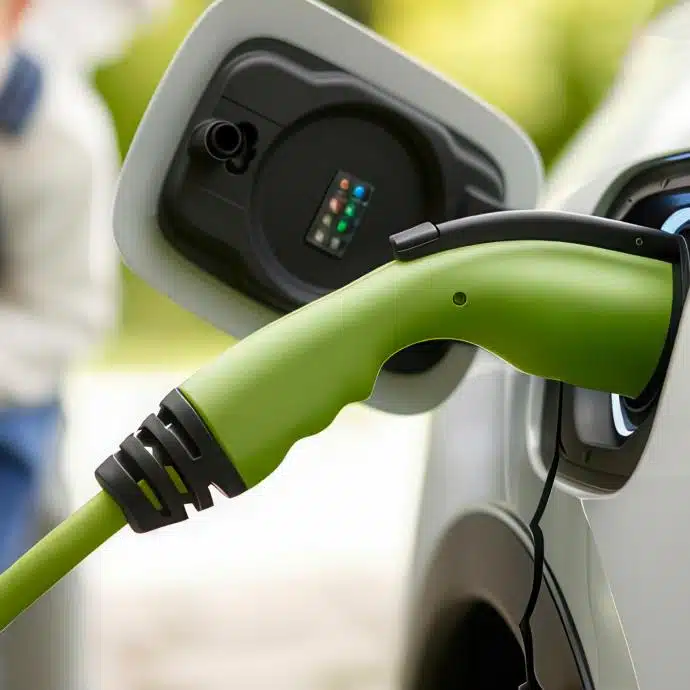
Other communities are using energy planning to evaluate locations for electric vehicle charging infrastructure.
Georgia has become a major hub for EV manufacturing and investment, making local charging networks an increasingly important part of community development.
Administrative Challenges for First-Time Grant Recipients
Despite the promise of these projects, implementation has not been without obstacles.
Many of the participating communities are small municipalities with limited administrative capacity, and several have never managed a federal grant before. Requirements such as financial audits, procurement rules, and labor standards have slowed project timelines.
“A lot of these communities have never dealt with federal grants,” Lord said. “There’s been a lot of education around the process.”
In some cases, communities are still working through procurement requirements or catching up on overdue financial audits before they can fully access grant funds.
To help streamline communication, GEFA has worked closely with regional planning commissions. In one region, eight communities share a single point of contact through their regional commission, allowing information to be distributed more efficiently.
“That’s been really helpful,” Lord said. “We’re able to standardize things and keep everyone on the same page.”
Racing the Clock
The program is also facing a deadline. Contracts for most EECBG projects currently expire July 31, though GEFA has requested an extension from the Department of Energy to give communities additional time to complete projects.
Even if some communities cannot complete all planned upgrades, Lord hopes they will at least use a portion of their funding.
“My goal is that everyone who was awarded gets to spend down some of their funds,” she said.
Building Momentum for Future Programs
The strong interest in the EECBG grants has already led to additional state initiatives.
GEFA used its regular State Energy Program funds to support wait-listed applicants, awarding smaller grants of about $112,000 to communities that narrowly missed the initial funding round.
The agency has also launched a new initiative called the Georgia Energy Grant Program, inspired in part by EECBG and similar programs in neighboring states. The new effort distributes smaller grants — about $500,000 total in its first round — for projects such as energy audits, EV infrastructure, solar feasibility studies, and building upgrades.
Unlike EECBG, the new program also allows nonprofits to apply, expanding access to energy efficiency funding across the state.
GEFA hopes to run the program annually, adjusting priorities based on feedback from communities and stakeholders.
Education as a Core Goal
Beyond the infrastructure improvements themselves, Lord says one of the program’s biggest impacts has been raising awareness about energy efficiency.
While GEFA is widely known in Georgia for water and environmental financing, many local governments are less familiar with its energy programs.
“We realized the education around energy just isn’t always there,” she said.
For some communities, a simple lighting upgrade or energy audit can reveal immediate savings. For others, the program has sparked broader conversations about resilience, workforce development, and long-term energy planning.
“It’s about getting our foot in the door,” Lord said. “If communities can see the savings and the benefits, hopefully they’ll keep coming back for future programs.”
And as the first round of projects nears completion, she is eager to see the results.
“EECBG has been a fun one,” Lord said. “But I’ll be really excited when every single project is finally closed out and we can see how they all went.”


