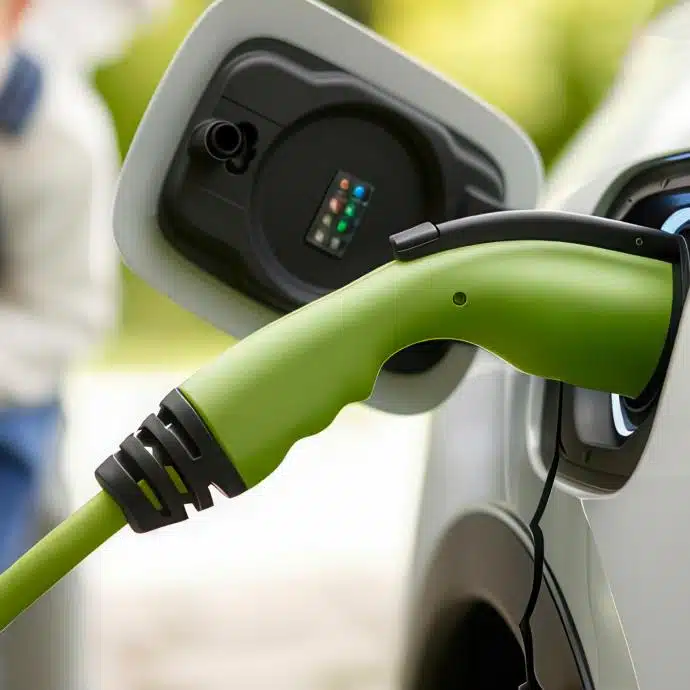


This article is part of a series exploring the ABCs of EVs: Affordable, Better, Convenient.
Meet an EV driver: Chris

Do current gas prices have you typing “buying a used electric vehicle” into search engines? Are you unsure where to start? First off, you may be unaware that right now is a fantastic time to buy a used EV for several reasons. There are more reliable used EV makes and models being offered than ever before, and they are often cheaper than their comparable gas models. Lower fuel and maintenance costs make their lifetime ownership costs even more compelling. Resources that help you identify what to look for in a used EV and where to shop can save you both money and time.
Where to Look to Find a Used EV
EV-Only Online marketplaces
There are several ways to explore used EVs online. Several new websites are now tailored to searching for electric vehicles. For example, Coltura’s Electric Car Deal Explorer can be filtered by range and maximum time to fully charge. Veloz’s Electric For All website helps you find the right used EV and identify used EV incentives. In addition to selling EVs, Recharged offers articles comparing popular models and tips on buying a used EV. Additionally, car manufacturers like Tesla and Rivian offer robust online marketplaces.
Online marketplaces
You can also buy an EV on the same sites that you purchase a gas-powered car, like Carvana and CarMax. Chris had been interested in Chevy Bolts ever since they first came out about 10 years ago.
“When my wife and I were considering buying a new car, I went straight to looking for a Chevy Bolt. They are not common here in South Carolina, so I looked on the internet for used Chevy Bolts all over the Southeast. By searching on cars.com, I found out about a dealership in Alabama, Donohoo Auto, that had a large inventory of used Bolts. We selected the car we wanted and had it delivered to our home. It was our first experience buying a car over the internet, and it was a little bit nerve-racking, but in hindsight, the experience could not have been better.”
In-Person dealerships with EV expertise
There is a wide range of expertise among in-person dealerships, and your experience may vary widely. A good EV dealership has staff who are trained specifically on their EV models and can answer questions about the topics described below: battery health (range), warranty, and charging specifications. They should be able to talk fluently about incentives in the area. They should be able to demonstrate charging and have stations available for use. Additionally, they should have clear pricing. Local EV clubs can be a great resource in identifying a reputable used EV dealership near you, too.
What to Look for in a Used EV
Get started by making a list of the features that you value most. When shopping for a used gas car, people consider price, model year, warranty, and miles on the odometer. When looking at used EVs, additional factors need to be considered. Chris, who drives a used Chevy Bolt, identified three key features in his search:
- Good price
- Low wear and tear on the car and battery
- Enough range on the battery to drive about 3 hours round trip on the interstate without needing to stop and charge
Battery
Battery health. There are online tools that can provide insights into the battery’s health, such as Recurrent Reports. Understanding battery health can help you see how the car’s current range (how far an EV can go on a full charge) compares to its range when it was new, much like checking the battery health on your cell phone.
Battery warranty. The industry standard for EV battery warranties is 8 years or 100,000 miles, with many manufacturers guaranteeing at least a 70% battery capacity within that timeframe. When looking for a used EV, it’s important to understand how much warranty coverage is left and if the warranty is transferable. It is also important to check whether the make/model you are purchasing has a battery recall. For example, almost all 2017–2023 Bolt EV and EUV models had a battery recall and received either battery replacements or new software. A battery replacement resets the warranty date and mileage based on the new battery installation date.
Charging
Charging Basics. Getting up to speed on EV charging is critical before becoming an EV driver. Battery electric vehicles can be charged using a traditional 110V outlet and a charging cord plugged into the car. This is called “trickle charging,” or Level 1 charging, and it adds about 5-7 miles per hour. Most drivers can replenish what was driven in a day by plugging in overnight at home. The second way to charge is called Level 2 charging, and it allows you to add about 25-60 miles per hour. The third way to charge, DC Fast-Charging, is usually found along highways and allows you to quickly recharge 100-250 miles in half an hour.

Daily charging. It is important to consider your current physical charging capacity and have a daily charging plan before you drive your used EV home. Due to the convenience and low cost, 80% of EV charging is done at home. Charging a car at home is as simple as plugging into a 110V outlet using the charging cord that comes with the vehicle. To increase charging speed, some EV drivers choose to install a Level 2 charging station at their home. Level 2 home charging requires an electrician to install a 240V outlet and the purchase of a charging station that can be bought at many stores, including online.
Things to consider:
- Do you have a garage or an accessible outdoor electrical outlet?
- Can you use a traditional 120V outlet and Level 1 (or “trickle charge”) charging to meet your daily charging needs?
- Can you install a 240V outlet to plug in a charging unit (i.e., do you have electrical capacity in the panel)?
- If you cannot charge at home, having a work or public charging plan and understanding various networks and pricing is important
Chris’s primary concern before purchasing a used EV was charging the car on the electrical system of his 1963-built home. With a near-maxed-out breaker box, his concerns were valid. After quotes from three electricians, they settled on a medium-power charger.
“While the process of settling our home charging situation was a headache, everything has been superb since then,” said Chris.
Finding chargers on the road. Getting acquainted with charging on the road is best done before taking a long road trip. Free apps like PlugShare, A Better Route Planner, and Chargeway make it easy to locate charging stations on a map. Tesla models have locations built into the vehicle’s infotainment system. These apps allow you to filter stations by charger type (Level 2 or DCFC) and details like real-time availability, nearby amenities, and station reviews from drivers. Charging on the road is easier to find than ever before. In 2025, public EV charging increased 24% across the Southeast, with more reliable uptimes too.
Every EV Charges a Little Differently
Charge port. The port on the car dictates what charging network it can use-or if you need an adapter. Most EVs in America use the Combined Charging System (CCS): the J1772 port for Level 1 and 2 charging (AC) and the CCS Combo for DC fast charging. However, some of the older used models only have the J1772 port. So it is important to confirm the charging port capability prior to purchase. (See below)

Tesla uses the North American Charging Standard (NACS) for all levels of charging. Additionally, most manufacturers are adopting this charging port for 2025 and older models.
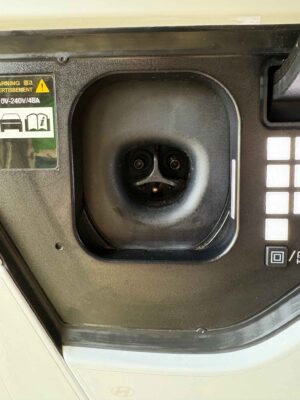
Charge Cords. All EVs come equipped with a charging cord that enables you to plug into a 120V outlet and Level 1 or “trickle charge”, adding about 5 miles of range per hour.
Charge Adapters. Some vehicles come with charging adapters that enable you to charge on other charging systems. For example, if you purchase a used 2025 Hyundai Ioniq 5, it comes equipped with an adapter for both AC/DC charging on the Combined Charging System.


Charging rate. The rate (hence time) at which the car can recharge varies among EVs. For example, the 2022 Chevy Bolt can only “DC fastcharge” at a rate of 55 kW, adding about 100 miles of range in 30 minutes. This is significantly slower than a Kia EV6 that has a whopping 800-volt system and recharges 180-200 miles in 18-20 minutes. It’s important to note that even if a charging station can discharge energy at 150kWh, if your EV can only accept electricity at a rate of 55kWh, that is as fast as you can charge. However, if you are almost exclusively charging at home and overnight, the charging rate may not be a strong deciding factor for you.
For Chris, “the (Bolt) is excellent as an “around town” car, and for short trips on the highway, but because it is not very quick to charge even at “fast chargers,” like some other EVs are, we don’t plan on regularly taking it more than a couple hours away from home–we have a second vehicle for that. Someday, we hope to replace our other vehicle with another used EV model that charges quickly at fast chargers.”
Fuel Efficiency and Fuel Costs
Most gas drivers understand their fuel efficiency in terms of miles per gallon. Because EVs are highly efficient machines, most get over 100 MPG equivalent (MPGe). A typical modern battery‑electric vehicle achieves 3.0–4.0 miles per kWh (roughly 100–135 MPGe). Understanding the fuel efficiency will help you project how much money you’ll save on fueling your EV versus a gas counterpart.


Read Kathleen’s experience saving money by driving electric and more about EV fuel costs in this article.
Identify Incentives for a Used EV
While federal EV tax credits have been eliminated, there are several utility programs that help lower both the cost to install charging infrastructure and the cost of electricity to fuel your EV. The Southern Alliance for Clean Energy compiled a Utility Program Spreadsheet that tracks utility programs that can support EV drivers by state.
Time of Use (TOU) rates. TOU pricing encourages electricity use when demand is lowest for the electrical grid. This can dramatically reduce the cost per kWh of electricity by plugging in when the costs are lowest, usually overnight. Programs work in several ways:
- Offering lower rates if EV drivers charge their cars during the times of the program terms
- Providing a monthly credit for charging during program times
- Offering a flat rate for EV charging during specified times
Chris participates in his utility’s “time of use” rate plan, which allows him to fully charge the car overnight during hours with a discounted electricity price, 9 cents per kilowatt-hour, rather than the normal 13.7 cents.
Rebates for charging infrastructure. There are a variety of programs designed to support charging infrastructure. Some programs offer assistance by:
- Preparing the site for a charging station, including electrical upgrades and wiring
- Rebates to offset the cost of the charging unit
- Monthly rate including charging installation
Rebates for cars. Some programs offer rebates upon the purchase or lease of an electric vehicle.
Purchasing a vehicle is the second-largest purchase most Americans make, behind buying a home. Used EVs offer greater financial savings than a used gas car, are highly reliable, and there are more to choose from than ever before. Understanding what to look for in a used EV and where to look to find the right vehicle for you are tools that will make you a more educated and empowered consumer.
Additional Resources
Recurrent| Used EV Guide
Coltura | EV Outreach Targeting and EV Shopping Tools
ABCs of EVs
Visit our ABCs of EVs page to discover why EVs are more affordable, better, and more convenient than their gas counterparts. Get real-world insights from our community of EV drivers, and explore our ABCs of EVs one-page guide with links to resources.


