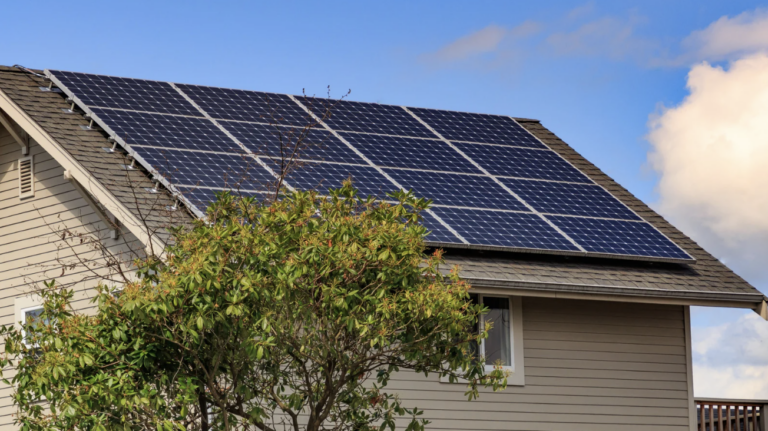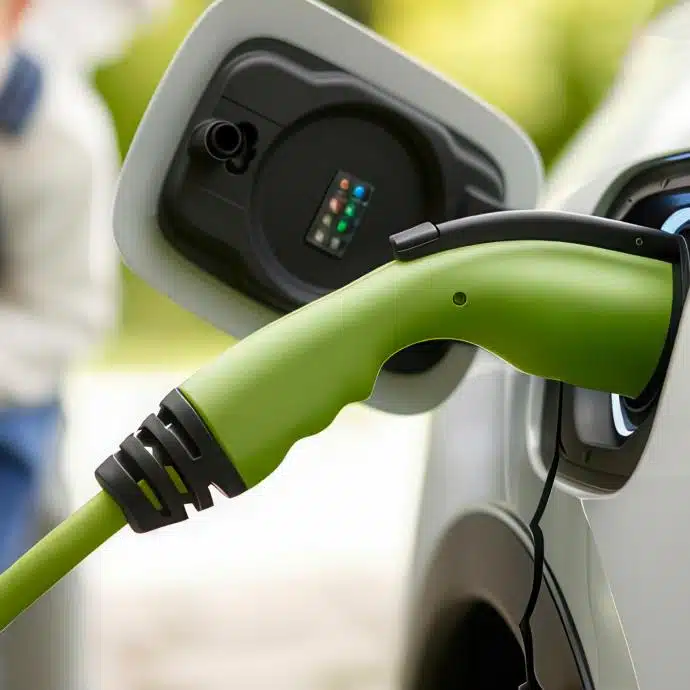


In this time of extreme weather such as heat waves, hurricanes, and more frequent heavy rain events that lead to flooding, resilient energy sources are needed more than ever, and solar+storage systems offer one viable solution by creating what is known as a virtual power plant, or VPP. According to the Solar Energy Industries Association, VPPs are networks of small energy generation sites — think hundreds of homes with rooftop solar — that are combined with storage technologies like home batteries and electric vehicles. VPPs can help grid operators manage peak demand, improve affordability, and bolster grid resilience by taking some of the strain off of centralized power plants, especially during times of peak demand.
The use of solar+storage helped many communities during Hurricane Helene in Fall 2024. As we approach the one-year anniversary of Hurricane Helene, we want to take time to showcase a solutions-based program for the Carolinas: Duke Energy in North Carolina’s VPP pilot program, PowerPair, which provides an incentive for solar+storage systems for residential customers.
PowerPair Basics
The intent of the PowerPair pilot program is to reduce Duke Energy’s peak demand by making solar+storage systems more affordable, incentivizing more customers to add solar+storage to their homes. The pilot program also increases resilience since solar+storage systems can continue to run even in a system outage. This is a 3-year pilot. Customers have until the end of 2027 to apply. Participants are required to participate for 10 years. Incentive levels vary depending on rate structure and utility battery control, with the maximum rebate being $9,000 per residence. Remaining program capacity is updated periodically on the PowerPair website.

The pilot consists of two cohorts.
- Cohort A is for residents who would like to control their battery themselves. These participants are on a time-of-use rate schedule that encourages them to reduce their utility-fed electricity usage during times of peak demand when it is most expensive for the utility to meet customers’ needs.
- Cohort B allows Duke Energy to control the customer’s battery and provides the customer with an additional monthly incentive.

A Missed Opportunity to Incentivize Resilience for Medical Device Households
As an additional resilience measure, a Cohort C Medical Device Pilot was also discussed throughout 2024/2025. The intent of the medical device pilot would have provided incentives specifically for solar+storage for individuals with a medical device. This would make these particularly vulnerable dwellings more resilient and allow these customers to shelter in place when there is a power outage. A great example of this working is a Savannah, GA homeowner who uses a sleep apnea machine and was able to shelter in place during Hurricane Helene. Unfortunately, despite efforts by SACE and others, in July 2025, Duke Energy notified the NC Utility Commission that, even though the costs of such a program would be fairly modest, Duke could not find a way to pay for the Cohort C Medical Device pilot program. Households with medical devices can, of course, still participate in the Cohort A or B pilot program, but without additional incentives.
How can I participate?
To participate in PowerPair, Duke Energy North Carolina customers select a Trade Ally, which is a contractor that has met the requirements to partner with Duke Energy. The Trade Ally helps the customer complete an Interconnection Request and program application, which is reviewed and approved within 10 business days. Once the installation is completed by the Trade Ally, required documentation is submitted, eligibility requirements are verified, and billing has started, the customer will receive the one-time PowerPair incentive payment. More information is available on the PowerPair website.
VPPs Can Support Resilient Communities Throughout the Southeast
VPPs throughout the Southeast are a great way to provide resilience, as shown in NC and FL during Hurricane Helene. In addition to providing resilience for customers, these programs reduce usage during periods when it is most expensive for the utility to provide service, thereby lowering utility bills for all customers. Duke Energy is leading by example with the PowerPair pilot, and the Georgia Public Service Commission recently approved a similar Georgia Power Company pilot as part of their 2025 Integrated Resource Plan. We encourage other Southeast utilities to follow in Duke Energy and Georgia Power’s footsteps and provide the opportunity for resilience and peak demand assistance for their customers.
Share Your Story
Are you a Duke customer participating in PowerPair? Do you have any experience with a similar program at another utility? We would love to hear your story! Reach out to serena@cleanenergy.org if you are willing to share.